Masquerade Memory and Creativity
Jump to:
Introduction
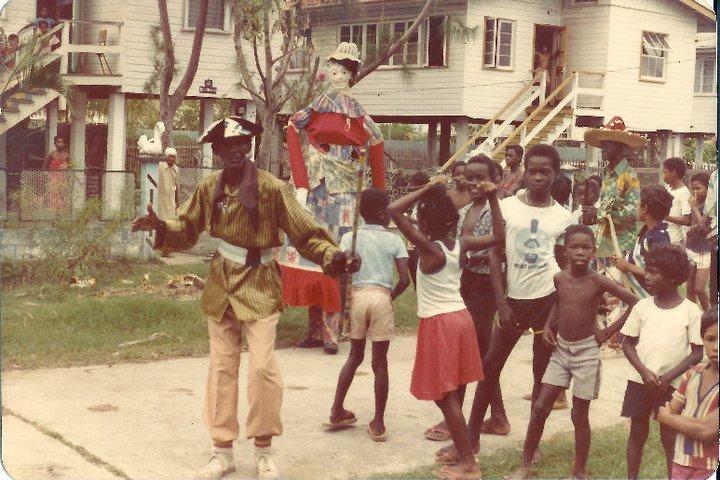
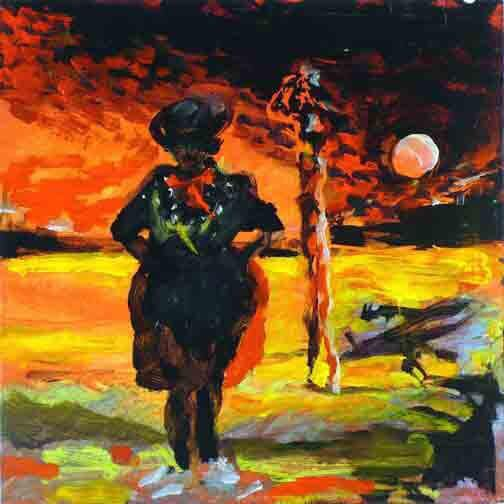
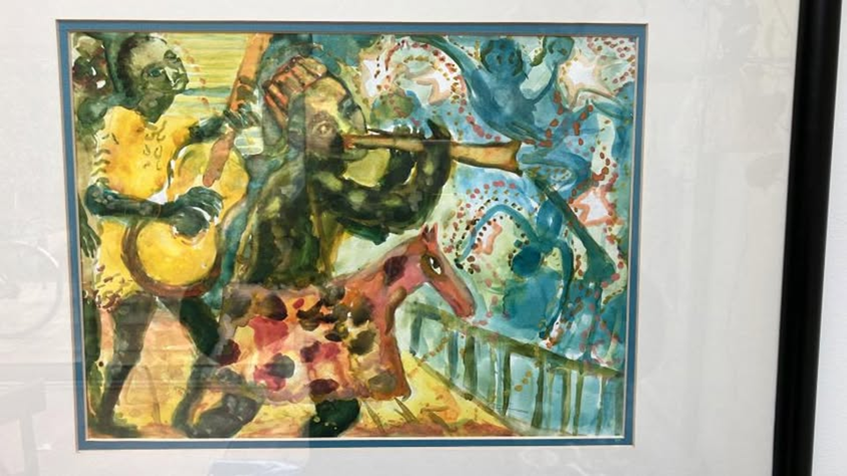
Hew Donald Joseph Locke, OBE, RA, is an influential British sculptor and contemporary visual artist. He grew up in Guyana during the early post-independence years. In this digital exhibition you will see a photograph of one of his paintings inspired by that era. The photograph was shared by Professor Richard Drayton.
On March 20, 2025, An Other Magazine published Asleigh Kane’s interview, “Hew Locke on Guyanese Masquerades.” Here he talked “about how his experiences watching Masquerade bands and how they inspired his artwork:
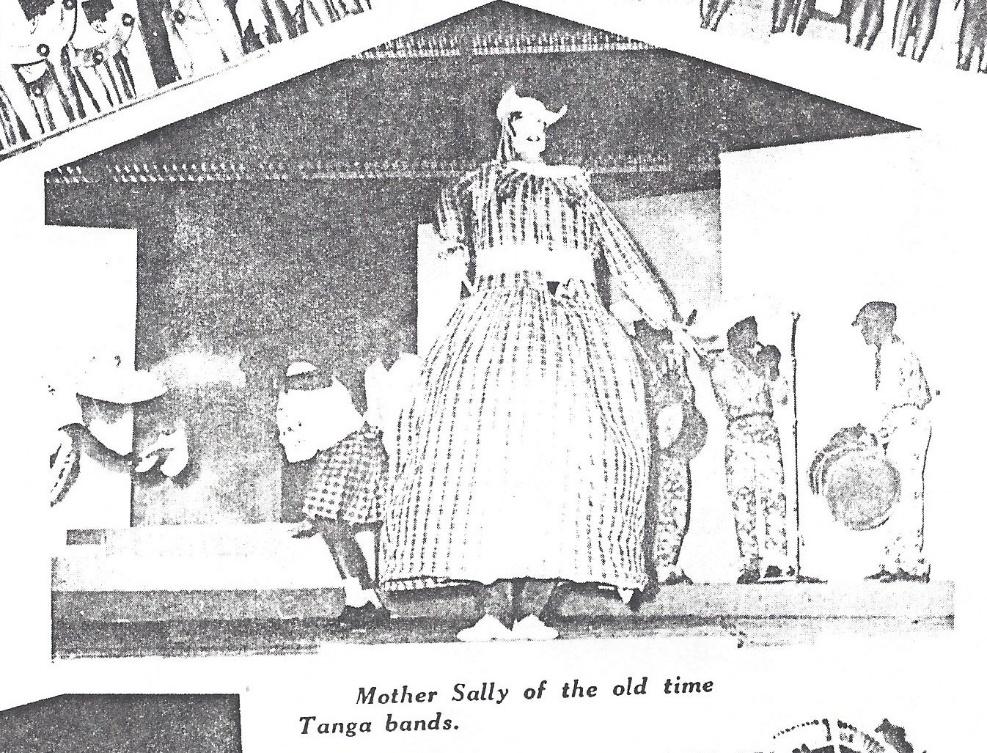
Christmas in Guyana wasn’t complete without a masquerade band. You would hear it coming in the distance – the high-pitched sound of a fife and a small snare drum. The band would move through the local area, going to places they knew they’d be welcome and could make some money. It’s a very powerful childhood memory. There were several characters…Mother Sally,was a white-faced stilt dancer in a big dress and tall people would have to move telephone cables out of the way so she could come down the driveway; the Bull Cow, was really disturbing, a character in a very crude costume with sharp horns. It would charge at all the kids, which was scary but exciting as well.
For many Guyanese, across generations, Hew Locke’s observations represent an organic truth.
In 2022, Hew Locke’s The Procession opened at Britain’s Tate Gallery. As the March 2025 publication observed:
In 2022, Locke transformed Tate Britain’s Duveen Galleries with The Procession: a Technicolour masquerade of almost 150 life-sized figures, as if frozen mid-migration, in robes made from fabric, resin and found objects, printed with antique sugar trade share certificates and imagery of dilapidated Guyanese houses. Wearing bright flowers in their hair and ornate masks covered in beads or skull depictions, they waved vast embroidered banners and flags. Their weathered costumes were suggestive of a long, arduous journey, in which visitors became active participants, weaving between the bodies and joining the march.
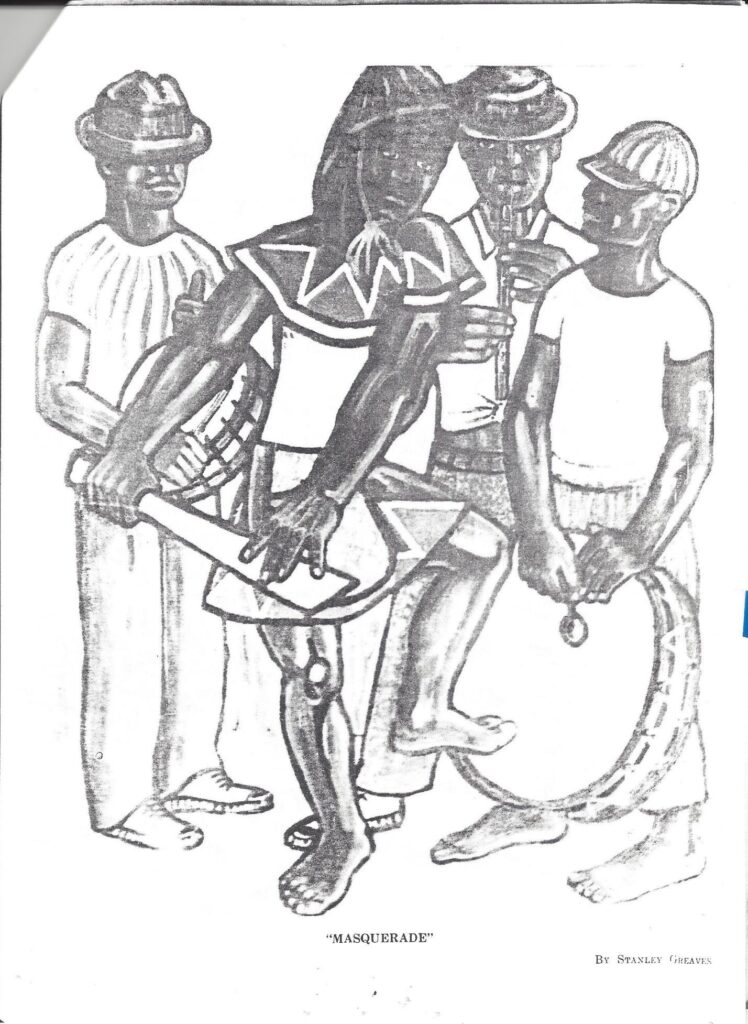
Masquerade has and continues to inspire the work of many Guyanese artists. They have expressed this inspiration in a wide range of media and formats, including ceramics, drawing, fiber art, installations, murals, paintings, photography, and sculpture.
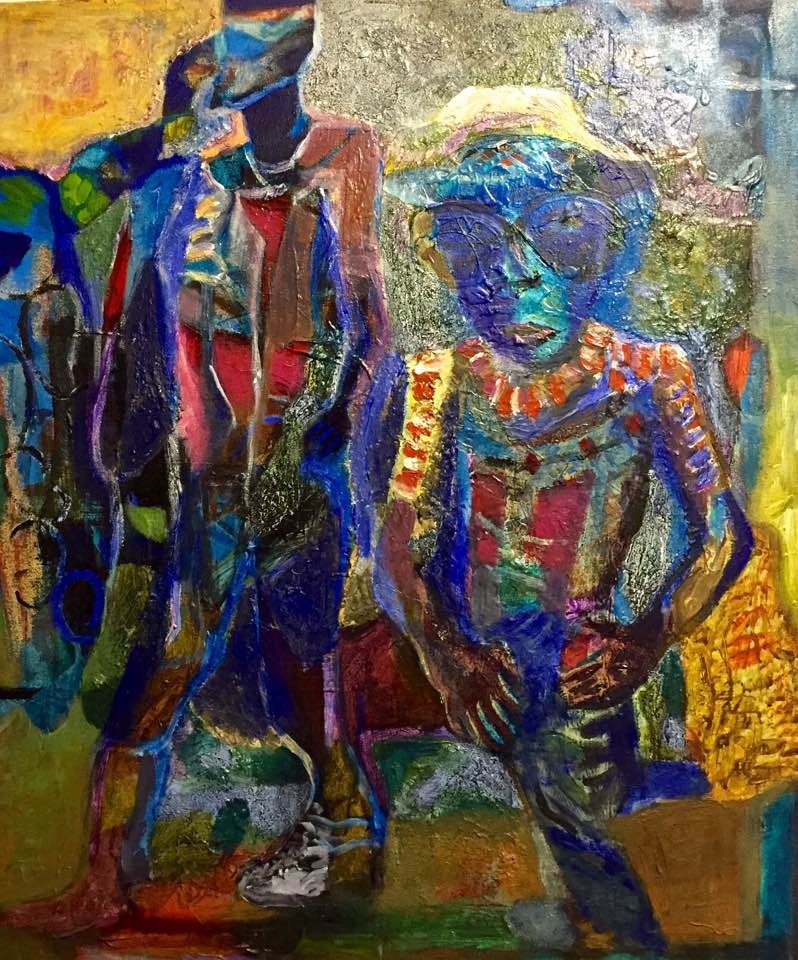
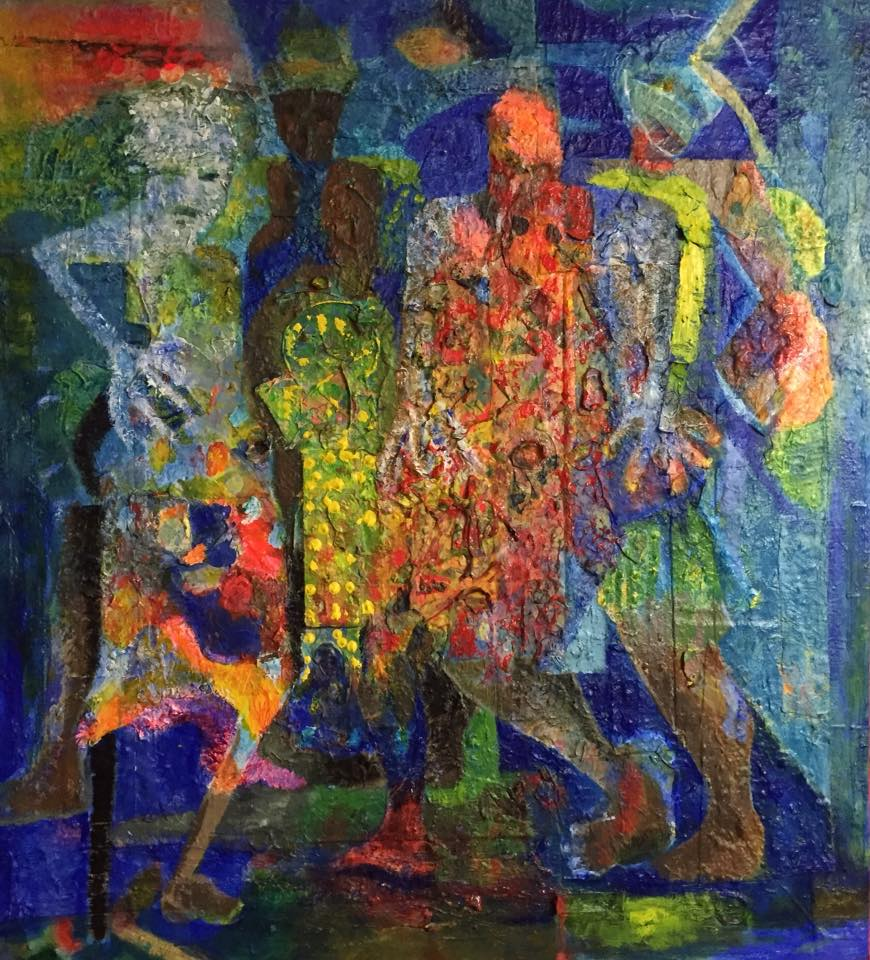
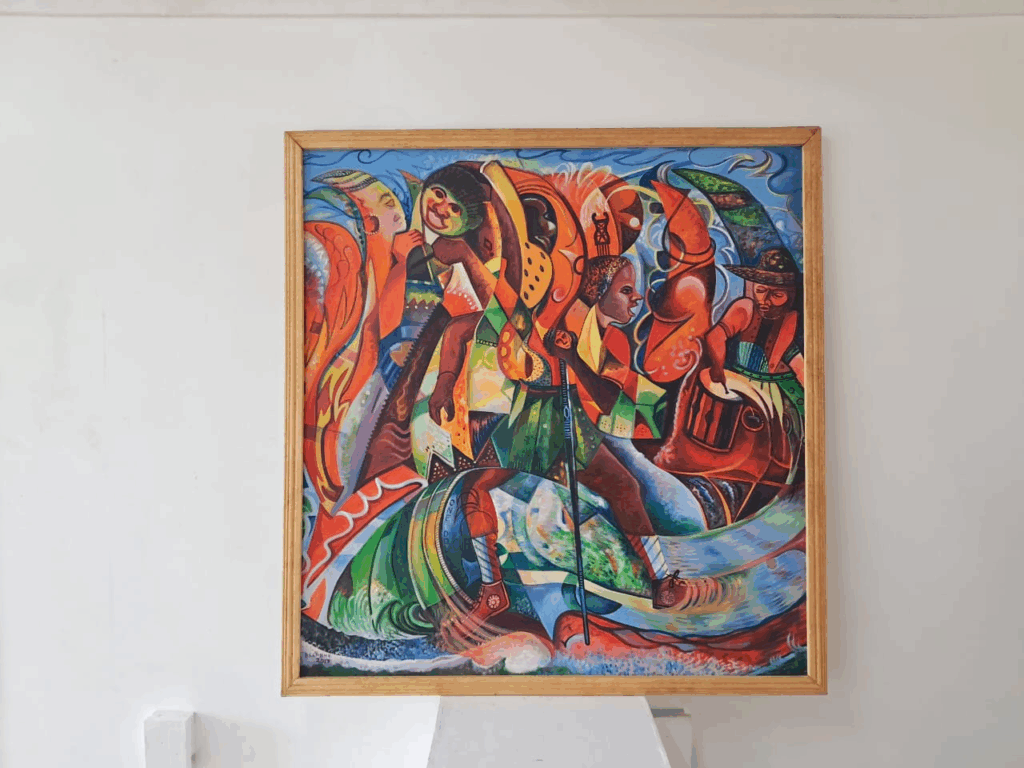
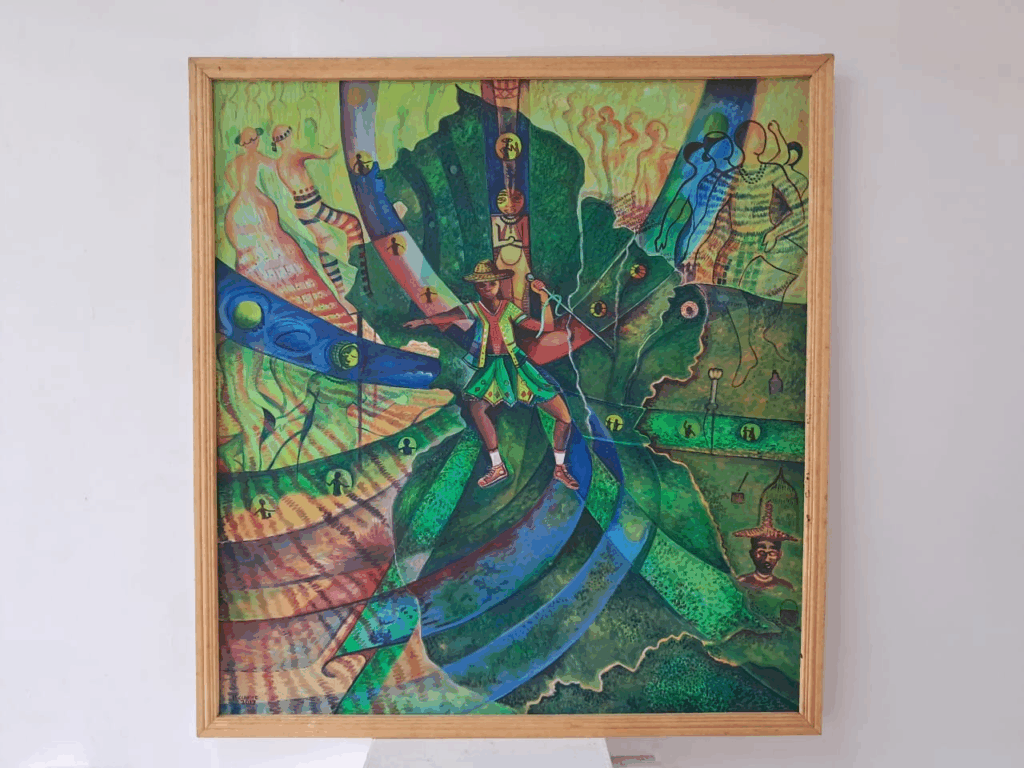
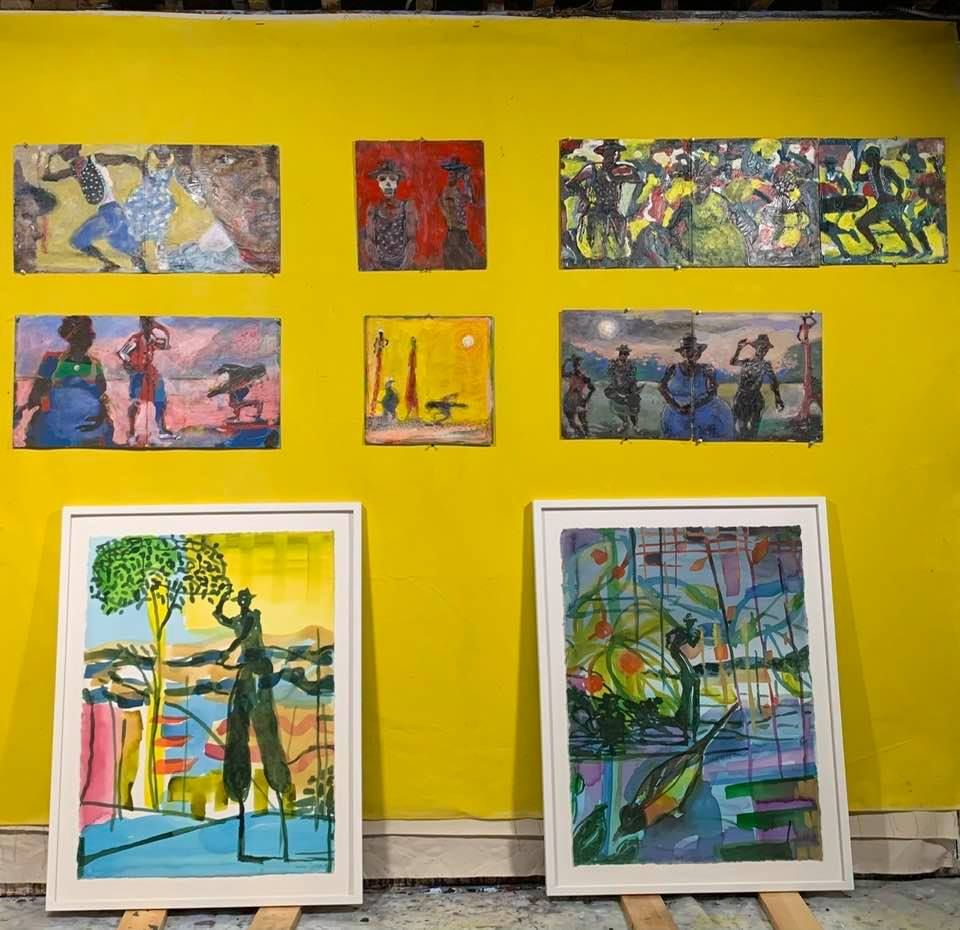
In this exhibition we feature photographs collected on social media, primarily Facebook, of art by Dudley Charles, Brian Clarke, Victor Davson, Grace Hale, Hew Locke, Ivor Thom, students of the E.R. Burrowes School of Art, and Joshua Tujay Macey. In addition, we draw upon photographs shared by Richard Drayon, Mart’n James, and Wayne McWatt and photocopies from photographs in the mid-20th century editions of the Chronicle Christmas Annual.
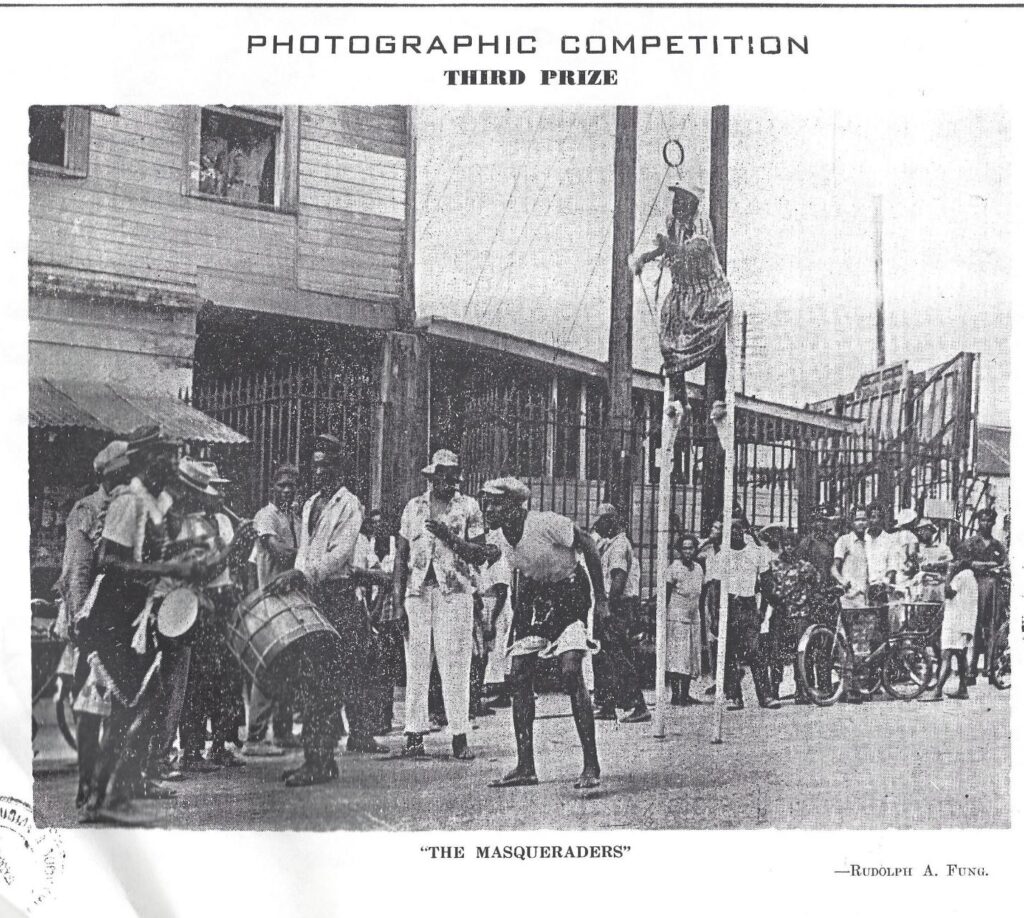
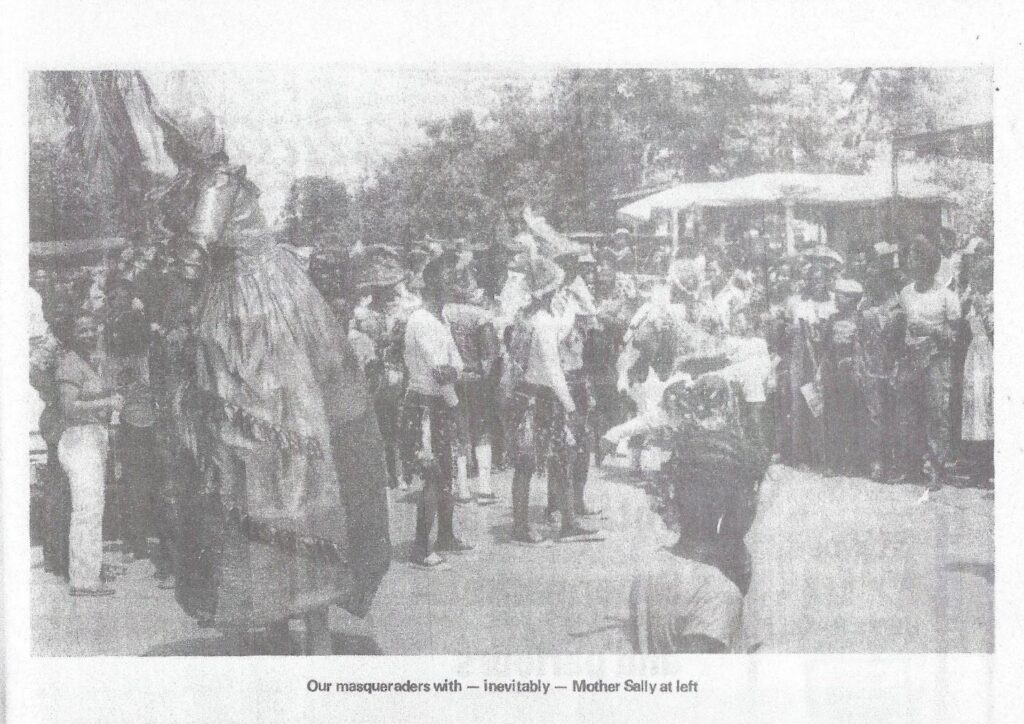
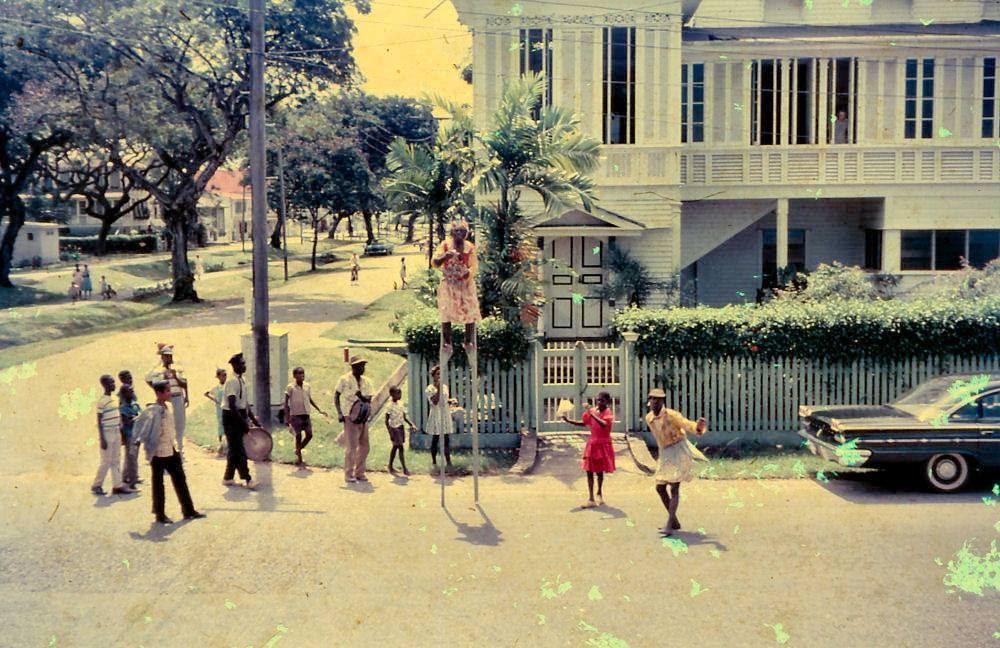
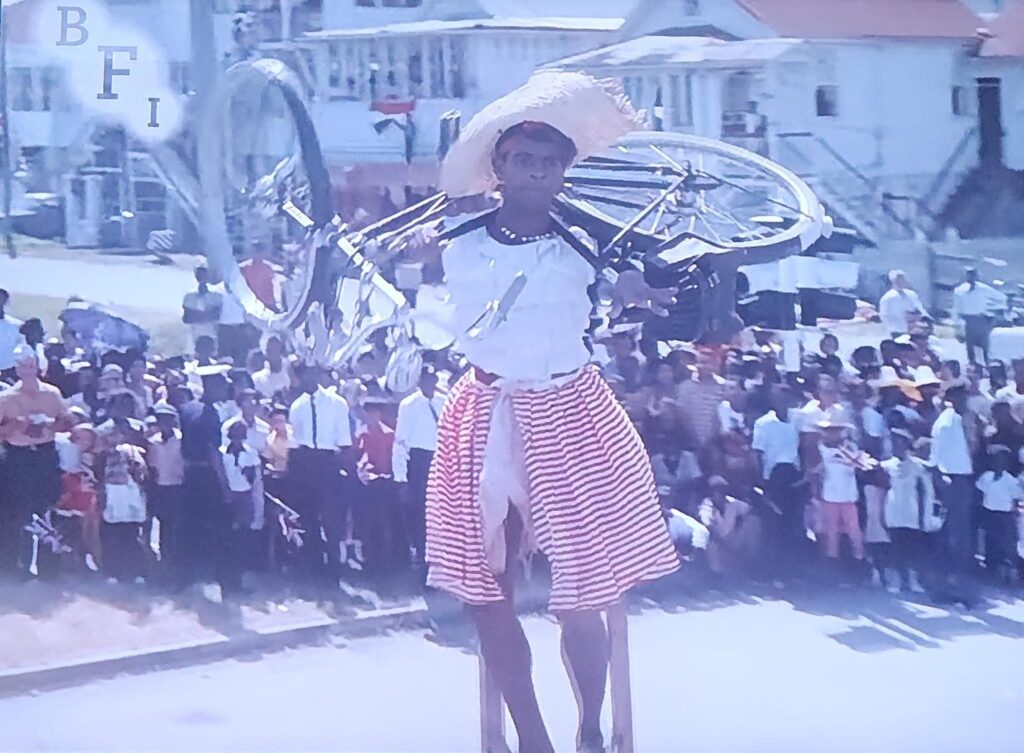
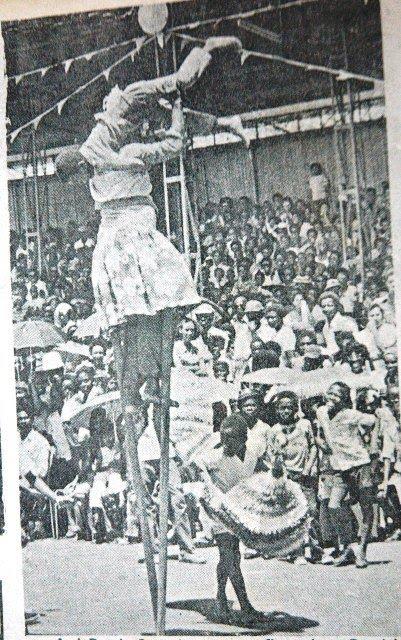
The photocopies and photographs from Drayton, James, and McWatt help us in visualizing the urban contexts in which Masquerade performed.
We hope that this selection will contribute to our appreciation of the theme of the 2025 Symposium and Literary Hang–Masquerade: Memory and Creativity. What memories does it invoke? How would you wish it forward?
Sources: Asleigh Kane, “Hew Locke on Guyanese Masquerades.” AnOther Magazine, March 20, 2025. Available online at Click here
Vibert C. Cambridge, A.A., Ph.D.
2025 Symposium and Literary Hang


What the Chronicle Christmas Annual represented were snapshots of Masquerade activities in the Dear Land. These “snapshots” along with personal photographs shared by Drayton, James, and McWatt give a sense of the pervasiveness of Masquerade in the middle decades of the 20th century.


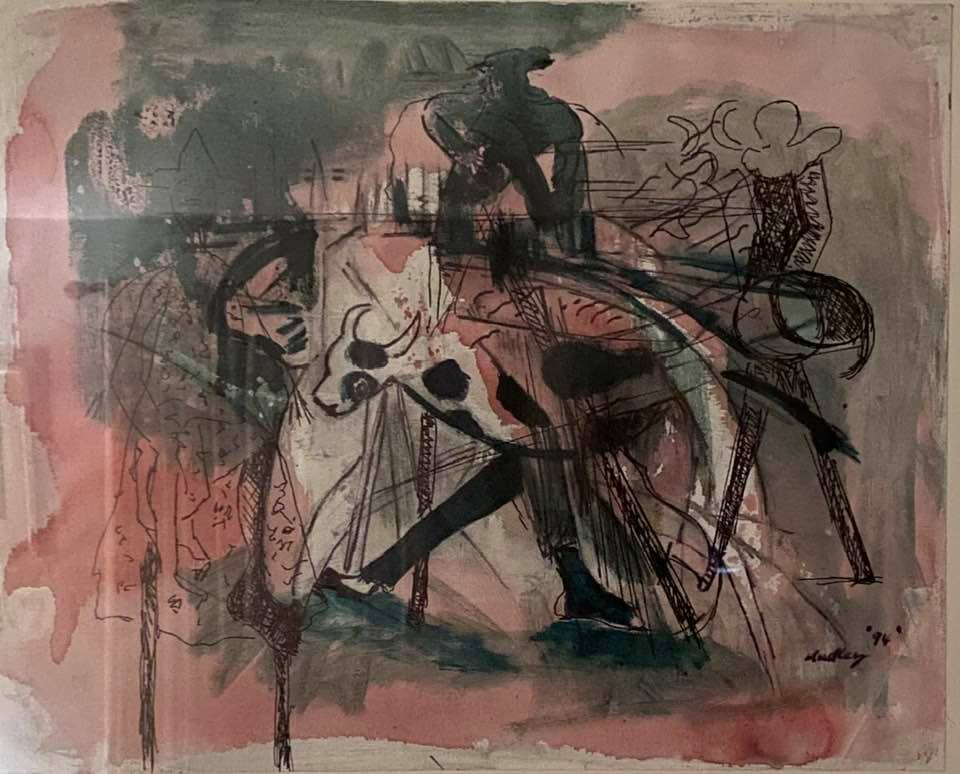
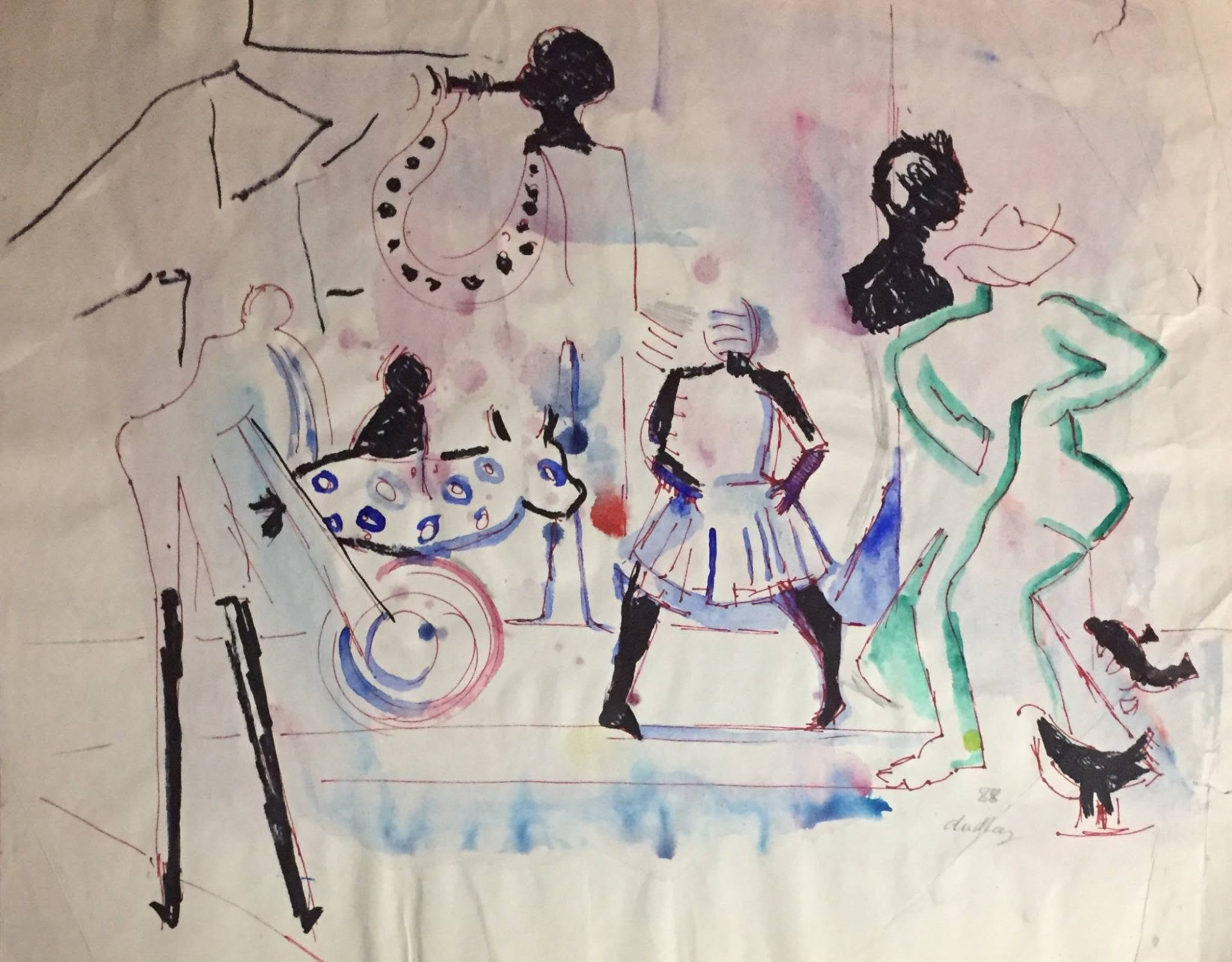
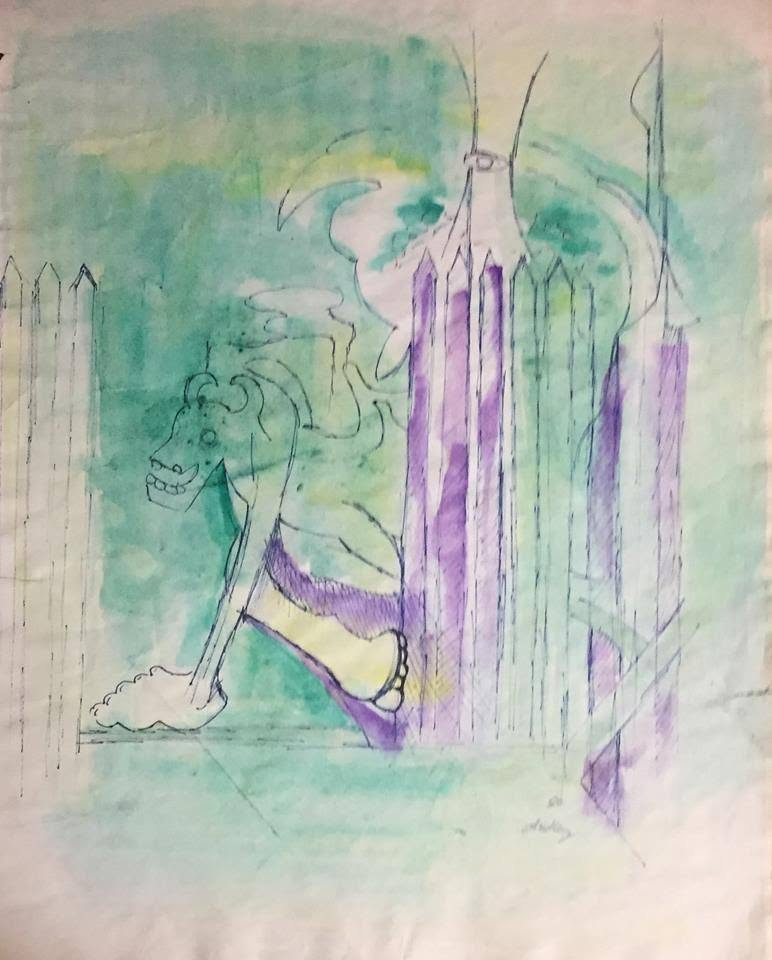
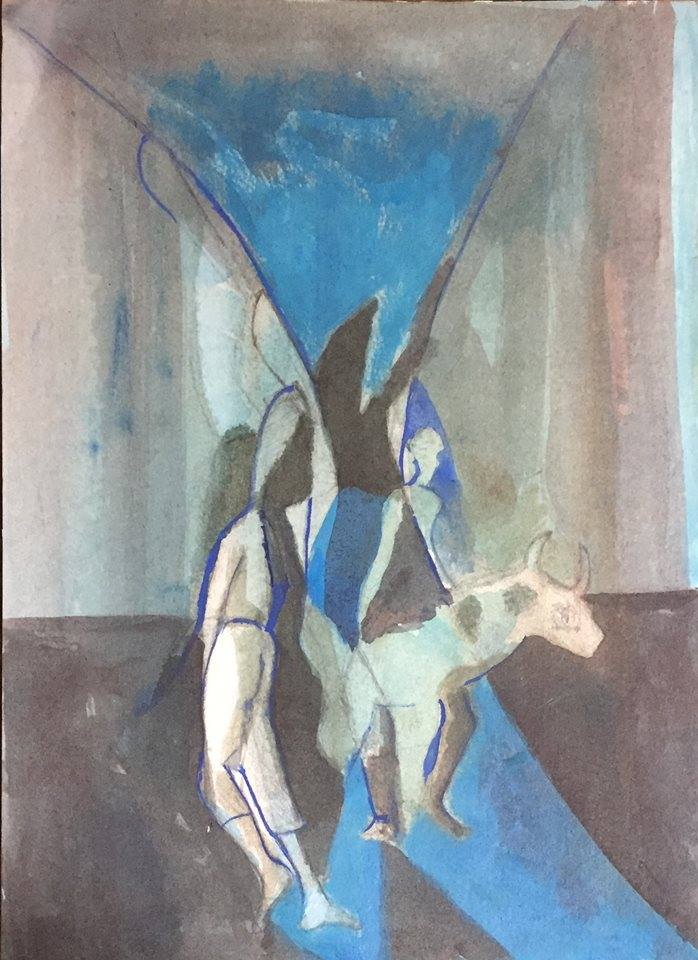
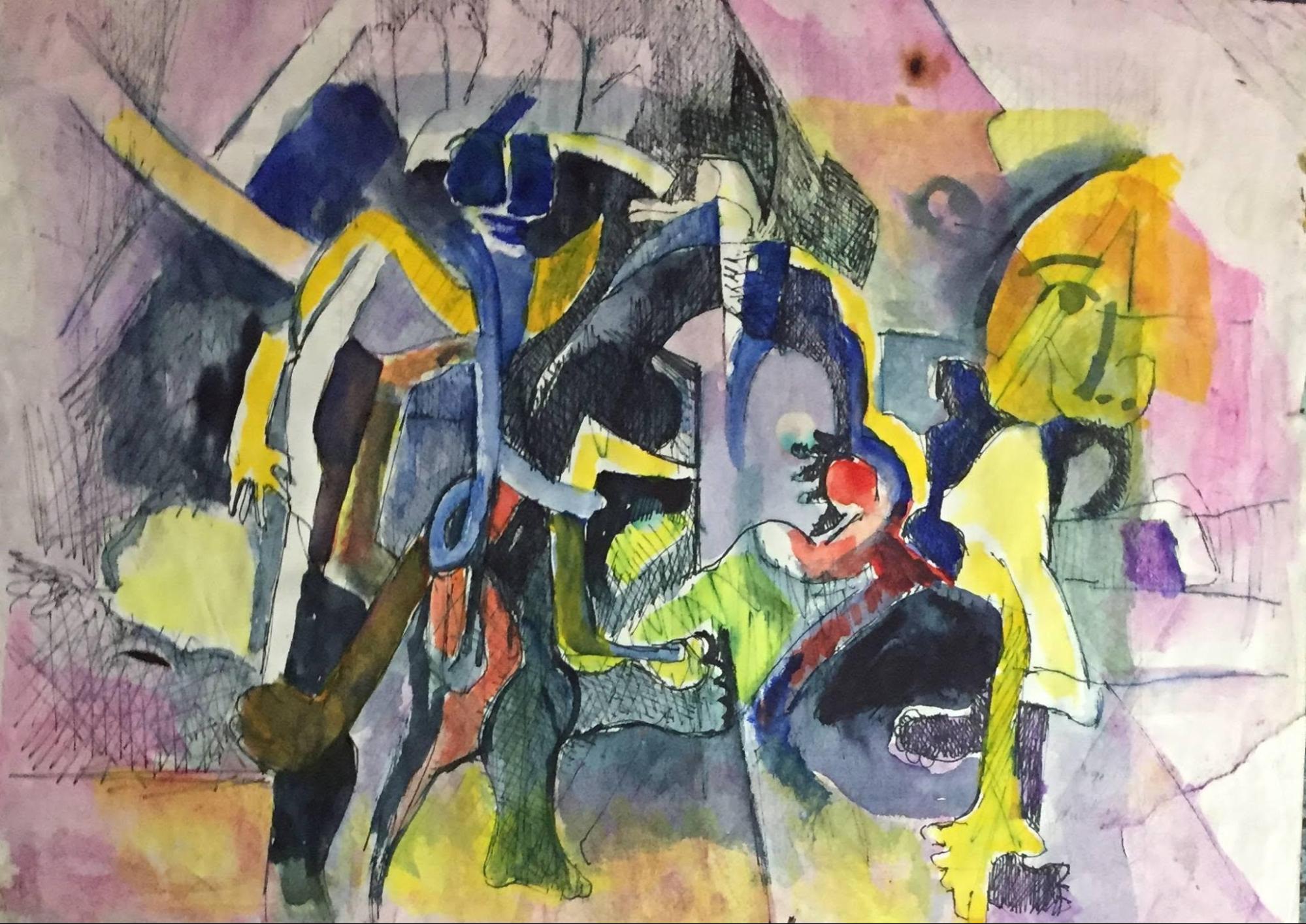
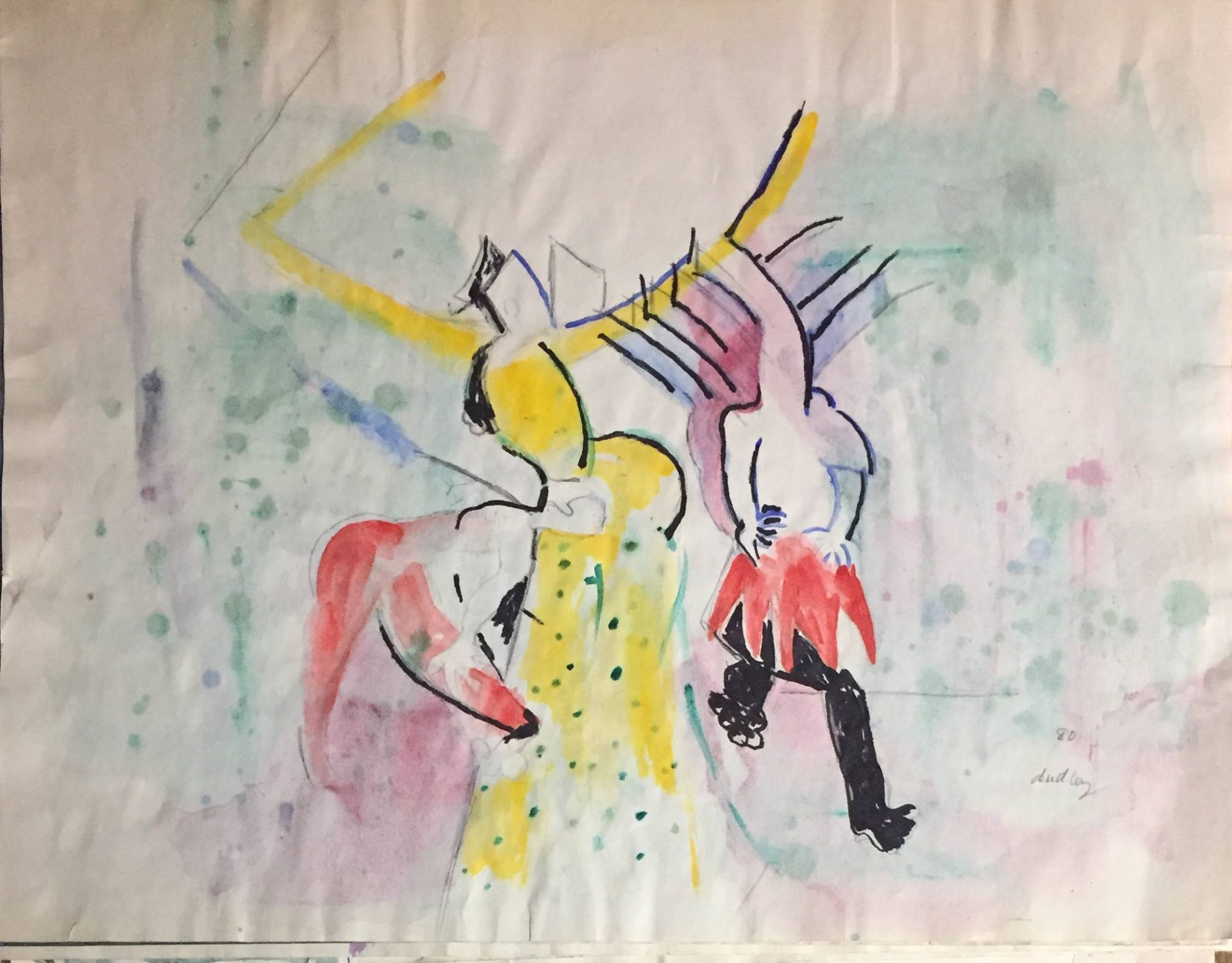
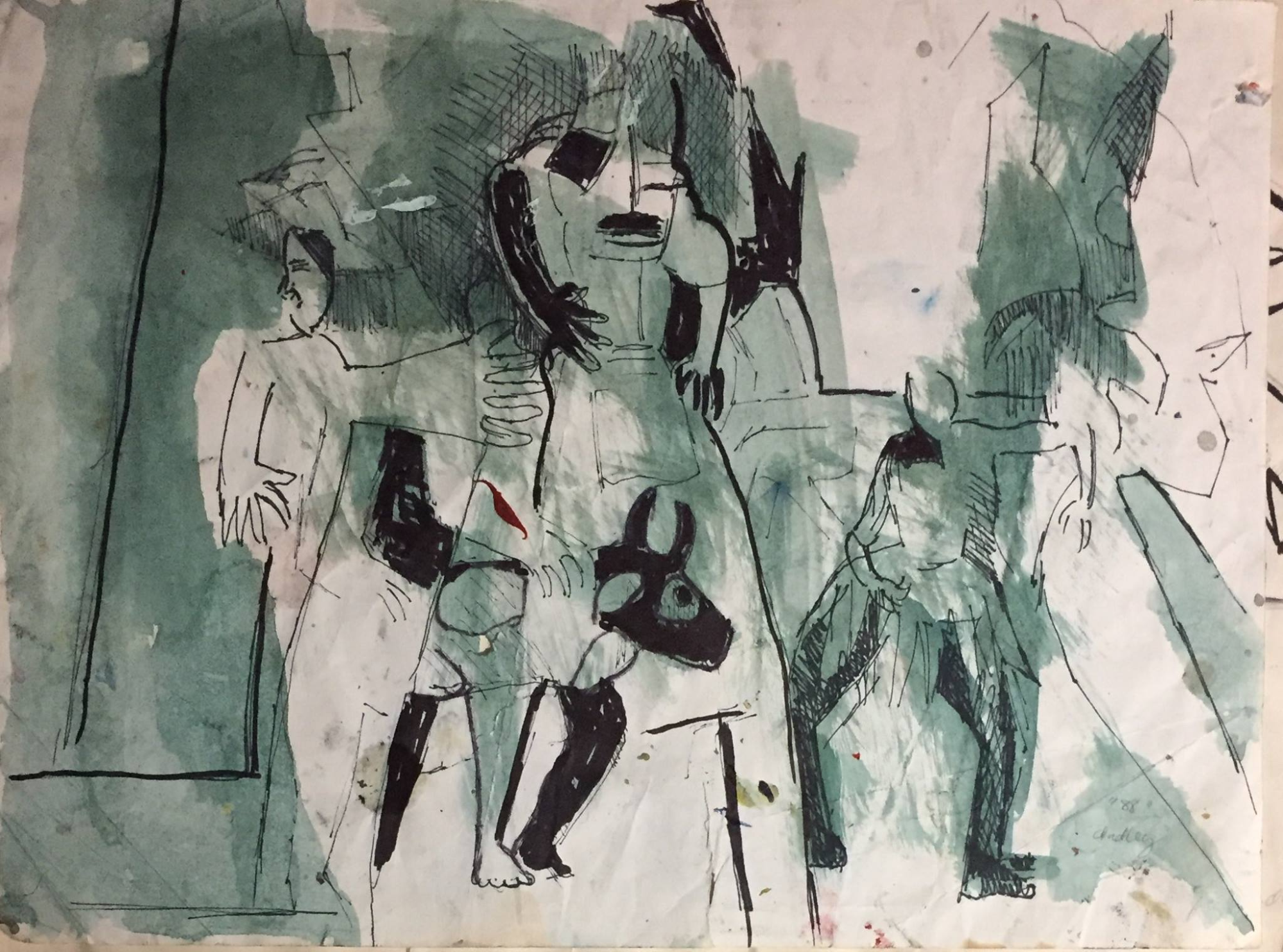
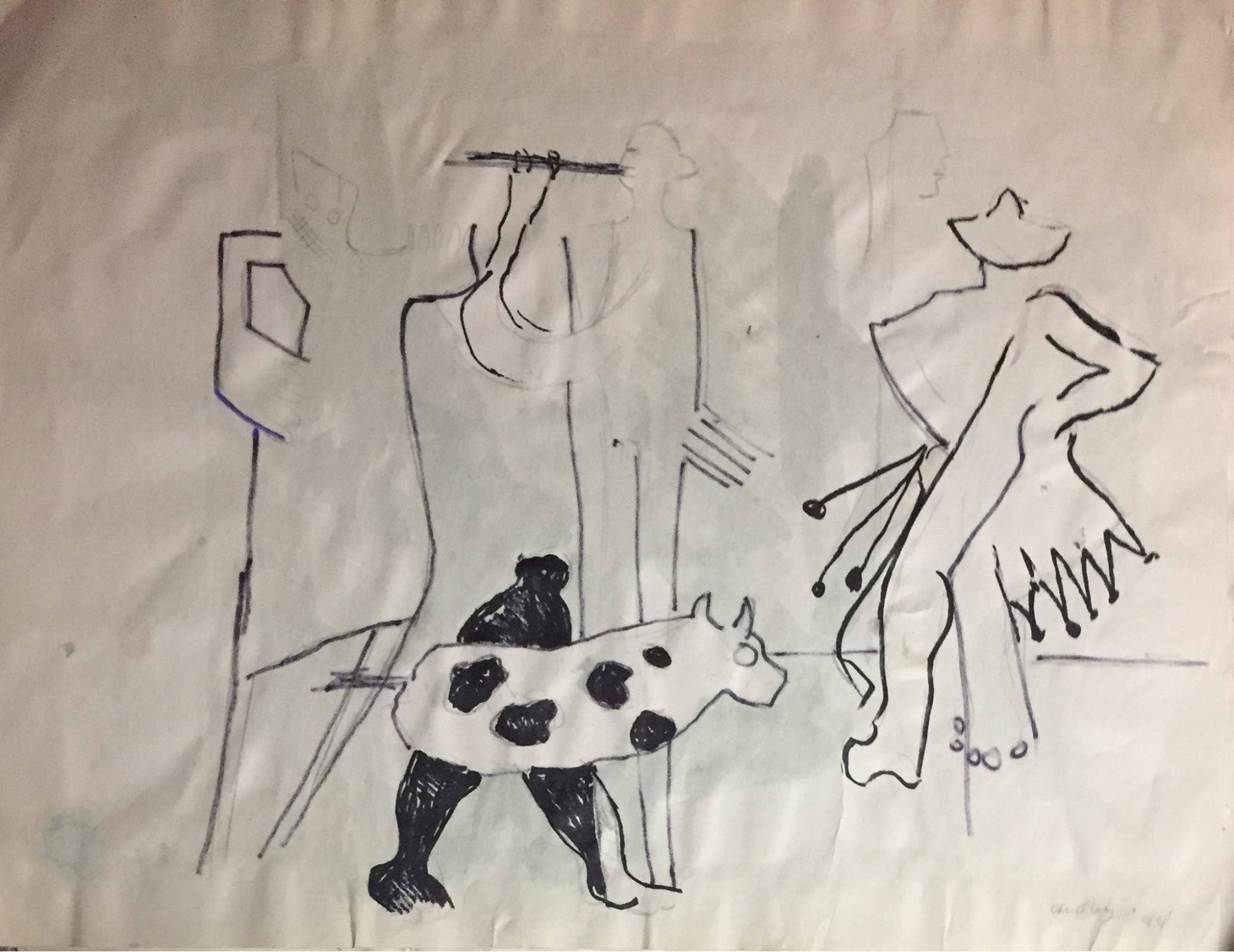
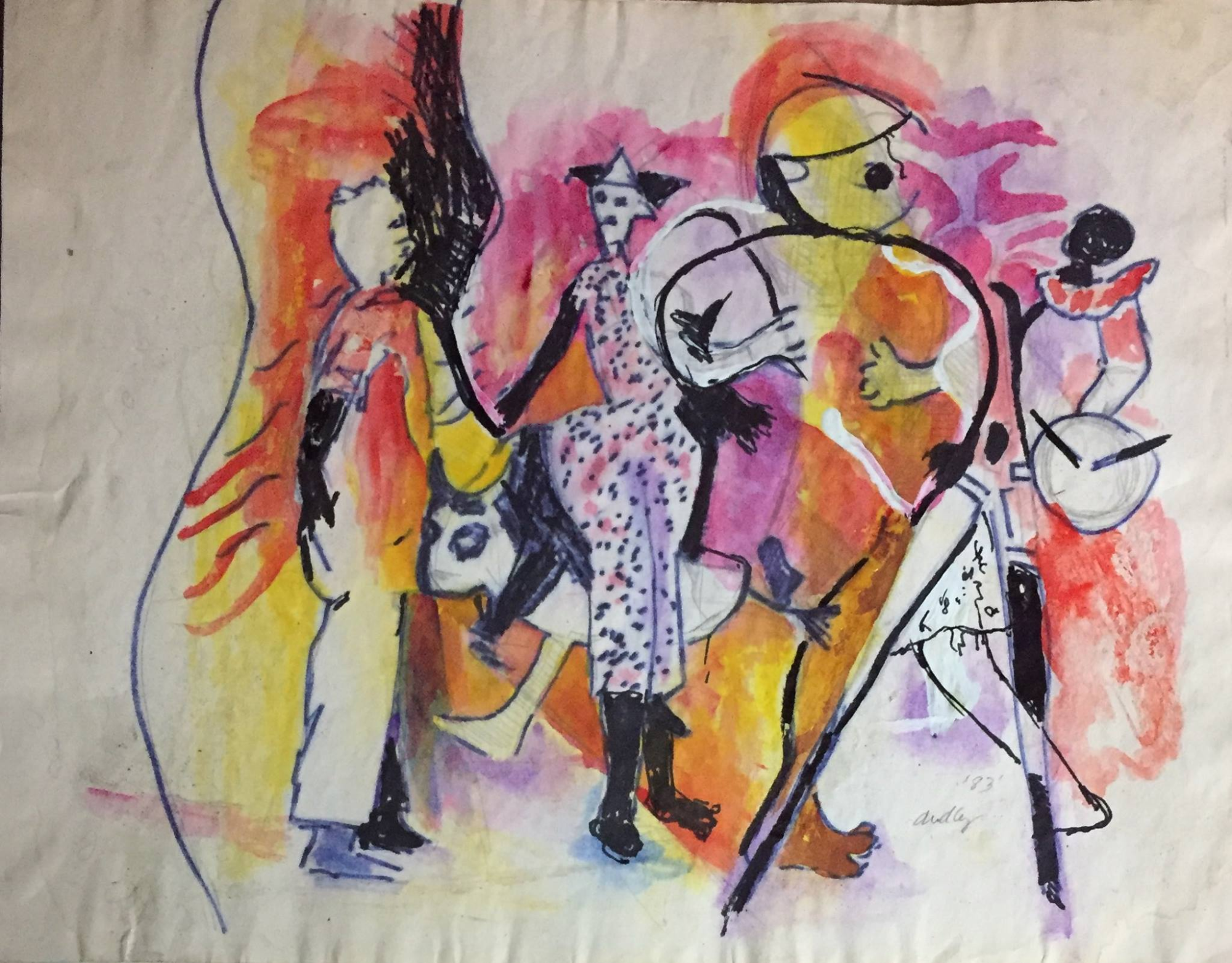
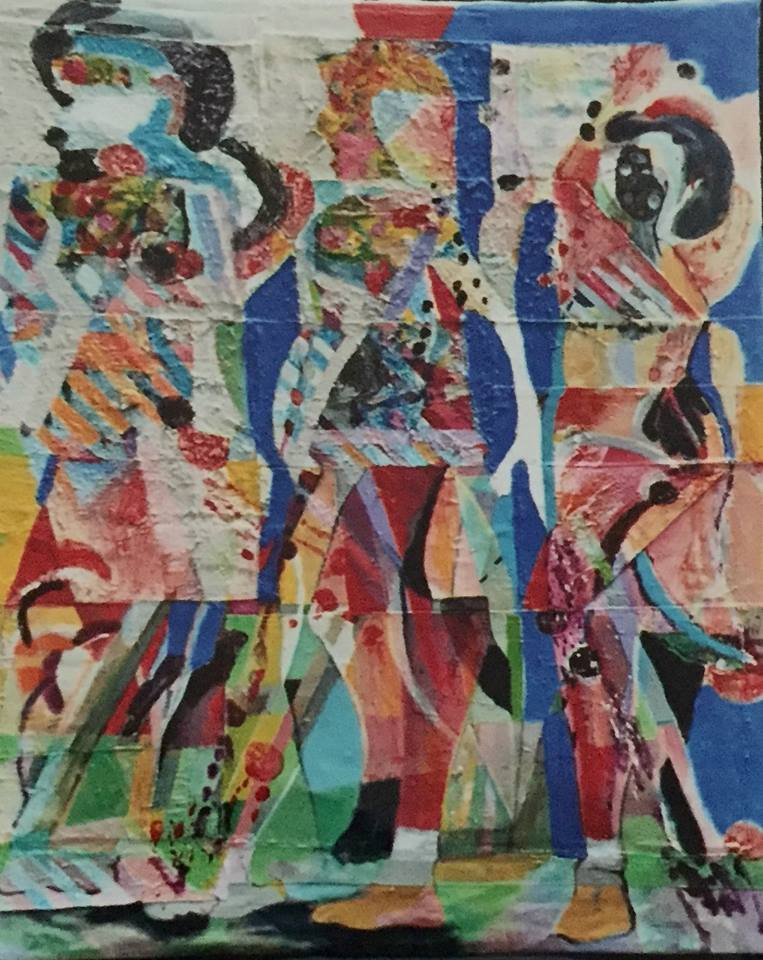
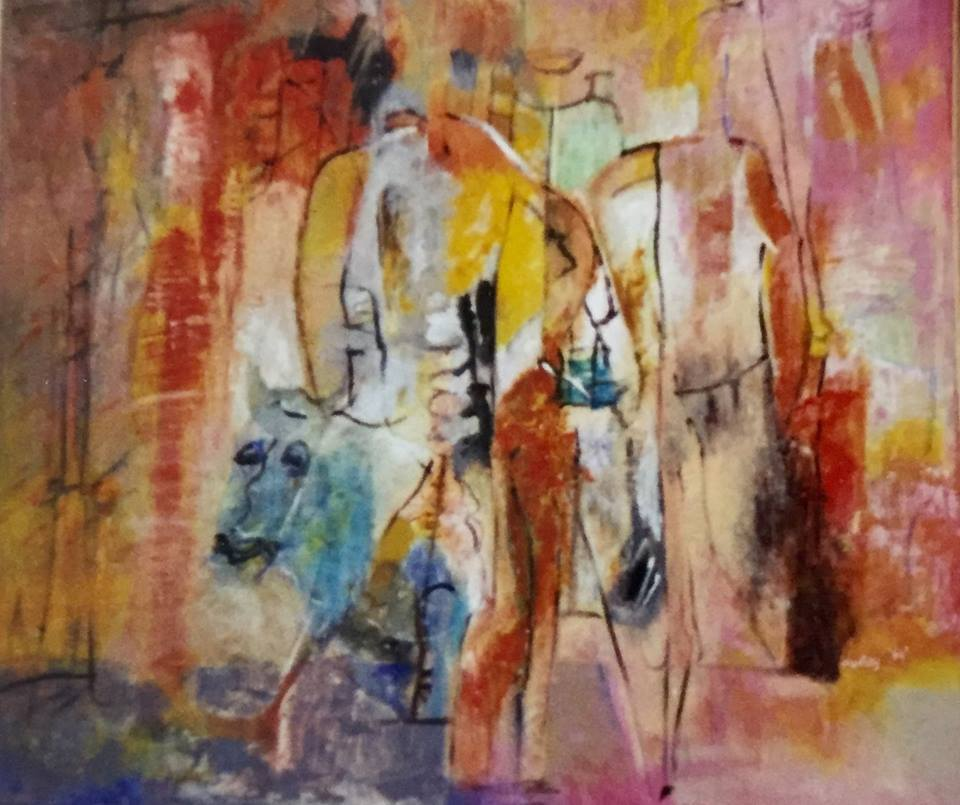
DUDLEY CHARLES
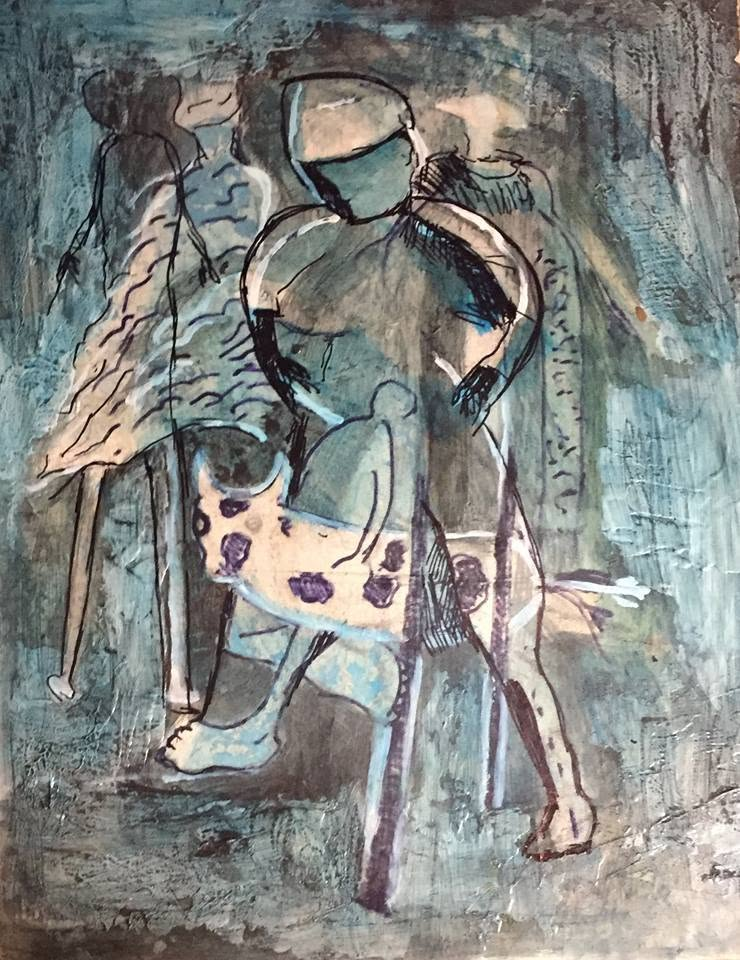
Dudley Charles is a practicing artist in the United States. This Plaisance-born artist is recognized as an important abstract artist. His works have been influential in the discourse on Guyanese aesthetics and identity in the post-independence era. His 1975 “Old House” exhibition was pioneering. His art celebrated the embellishments of the Guyanese “Old House” and established him as a sensitive observer of the shapes and lines of Guyana’s heritage. These fifteen pieces represent Dudley’s exploration of Guyana’s masquerade. Click to View Descriptions
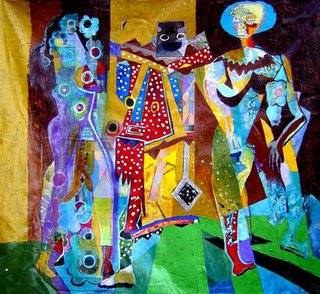
BRIAN CLARKE (1966 – 2025)
Brian Clarke, born on July 16, 1966, is a seasoned Guyanese artist and art educator with a career spanning several decades. He holds a Diploma in Painting from the Burrowes School of Art (1986), a Bachelor of Arts in Fine Art from the University of Guyana (2004), and a Certificate in Education Management from the same institution (2010).
Since 1986, Clarke has served as an art teacher in several Georgetown schools, including Ruimveldt Multilateral, St. Stanislaus College, and St. Joseph’s High School. In addition to his teaching career, he worked as an Illustrator and Designer for an IDB-funded Book Project in 1990.
His artistic journey includes participation in numerous exhibitions, such as Reunion 1990 at the Venezuelan Institute in Georgetown, and Guyanese Uprising at Castellani House in 1995. Between 1995 and 2000, he was featured in several solo and group exhibitions. Clarke also represented Guyana in Carifesta exhibitions held in Trinidad (2006), Guyana (2008), and Suriname (2013).
A strong advocate for the local arts community, Clarke is a co-founder of the Main Street Artists Group, contributing significantly to the development and visibility of Guyanese art.
Source: “Introducing our Participating Artists!,” Castellani House, Guyana.
The three pieces are in the series titled “History of Masquerade.” The paintings are now in Guyana’s National Collection, Castellani House.


VICTOR DAVSON
Victor Davson has exhibited widely throughout the northeast United States and in Great Britain, France, the Dominican Republic and Cuba. His work is in the permanent collections of the National Museum of Fine Arts, Havana, Cuba, National Collection of Fine Arts, Guyana, Newark Museum of Art, Montclair Art Museum, New Jersey State Museum, Jane Voorhees Zimmerli Art Museum, and Morris Museum. Fellowships and awards include a Pollock-Krasner Foundation Grant, a Rutgers Center for Innovative Print and Paper Fellowship, three New Jersey State Council on the Arts Fellowship Awards.
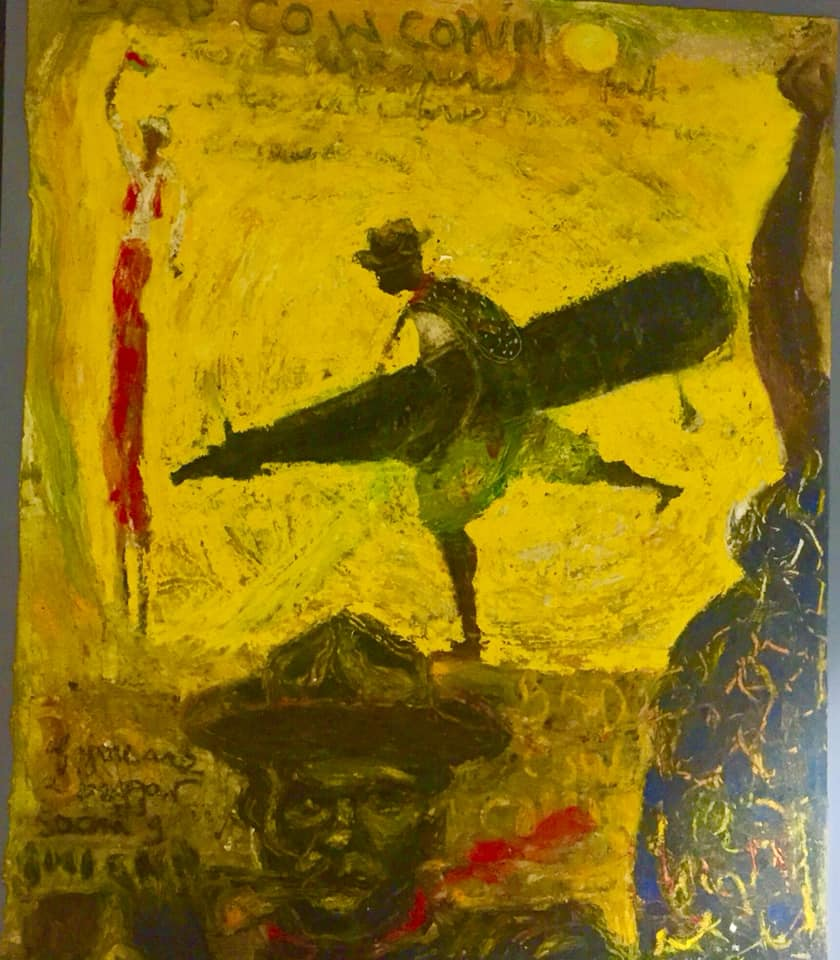
Davson was born in Georgetown, the capital of what was then British Guiana. He received a BFA degree from Pratt Institute, Brooklyn, New York and cofounded Aljira, a Center for Contemporary Art to support artists outside the mainstream. His thinking is heavily influenced by the anti-colonial politics of the Caribbean, and by the intellectual powerhouses of that period. These include extraordinary writers, poets and activists such as Martin Carter, Frantz Fanon, Walter Rodney, Rabindranath Tagore, V. S. Naipaul and Orlando Patterson. His body of work includes the Limbo Anansi drawings, Bad Cow Comin’ paintings, paintings on long playing vinyl record album covers and recent landscapes begun in 2020.
Solo exhibitions include In Full Bloom: Landscapes by Victor Davson, Akwaaba Gallery, Newark, NJ; The Misogyny Papers/Apology | Victor Davson, The Center for Contemporary Art, Bedminster, NJ; Victor Davson Recent Work, Rush Arts, Philadelphia, PA; The Misogyny Papers/Apology | Victor Davson, Exhibition and Workspace Project, Gallery Aferro, Newark, NJ; The Misogyny Papers/Apology | Victor Davson, Bertha V.B. Lederer Gallery, State University of New York, Geneseo, Online Exhibition; Victor Davson: Luminaria, Bertha V.B. Lederer Gallery, State University of New York, Geneseo; Victor Davson: Full Circle, Wilmer Jennings Gallery at Kenkeleba, New York, NY; Victor Davson: Full Circle, Berrie Center Kresge and Pascal Galleries, Ramapo College of New Jersey, Mahwah, NJ; Bad Cow Comin’: Recollections and Transformation, Rush Arts Gallery, New York, NY.
Group exhibitions include African American Artists & Abstraction, National Museum of Fine Arts, Havana, Cuba; Radical Vision and Imagination: Black Abstract Art in the 21st Century, Warburton Gallery, Yonkers, NY; Wolfgang Gil: Sonic Geometries, sound installation with works from the Newark Museum of Art collection, Newark, NJ; Cicely Cottingham, Victor Davson | Book of Hours/Ours, Bertha V.B. Lederer Gallery, State University of New York, Geneseo; Origins: Memories from the Metropolis, Akwaaba Gallery, Newark, NJ; Liminal Space, Caribbean Cultural Center, New York, NY; Collage Effects: Art of the African Diaspora, William Paterson University Galleries, Wayne, NJ.


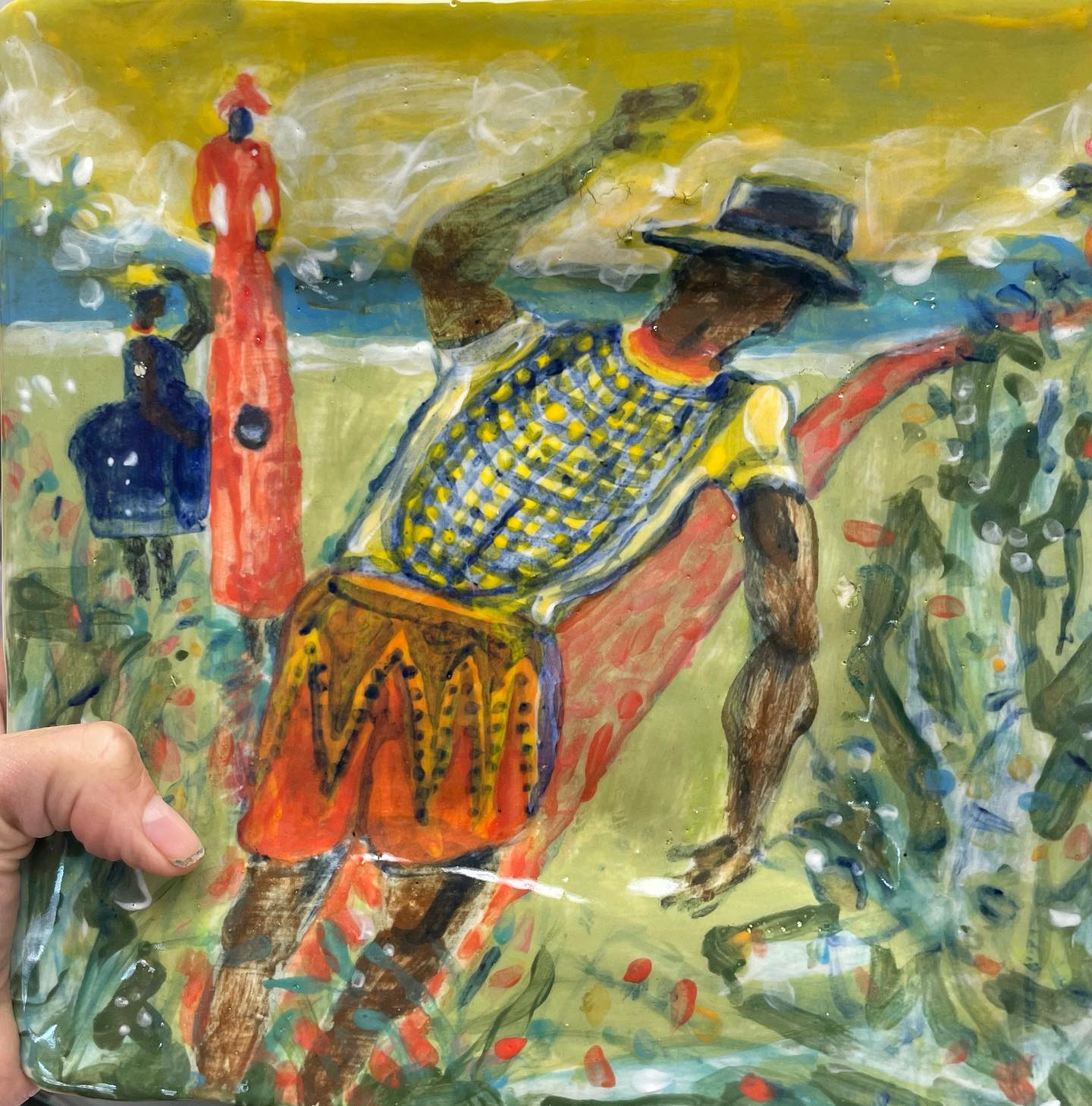
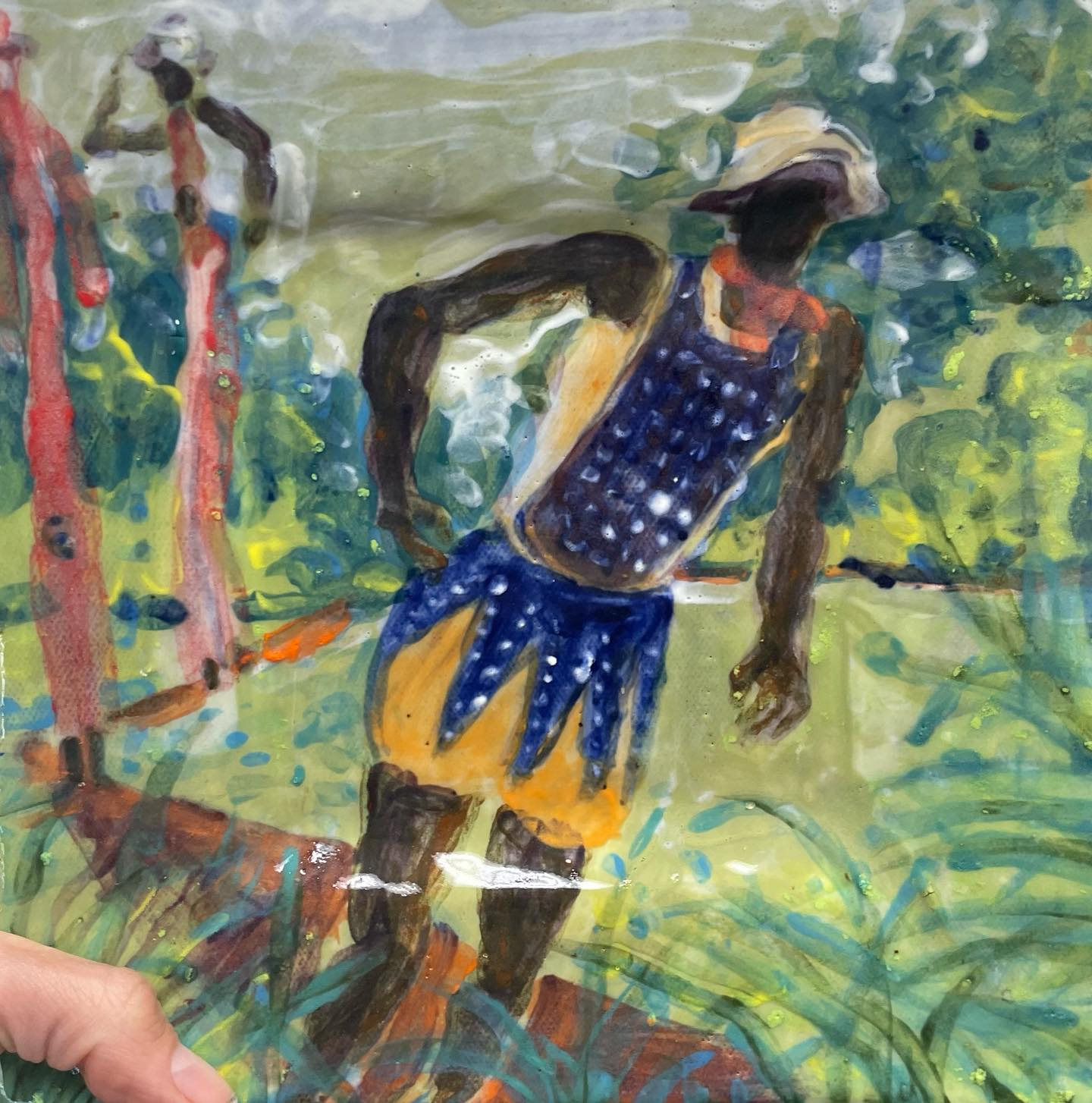
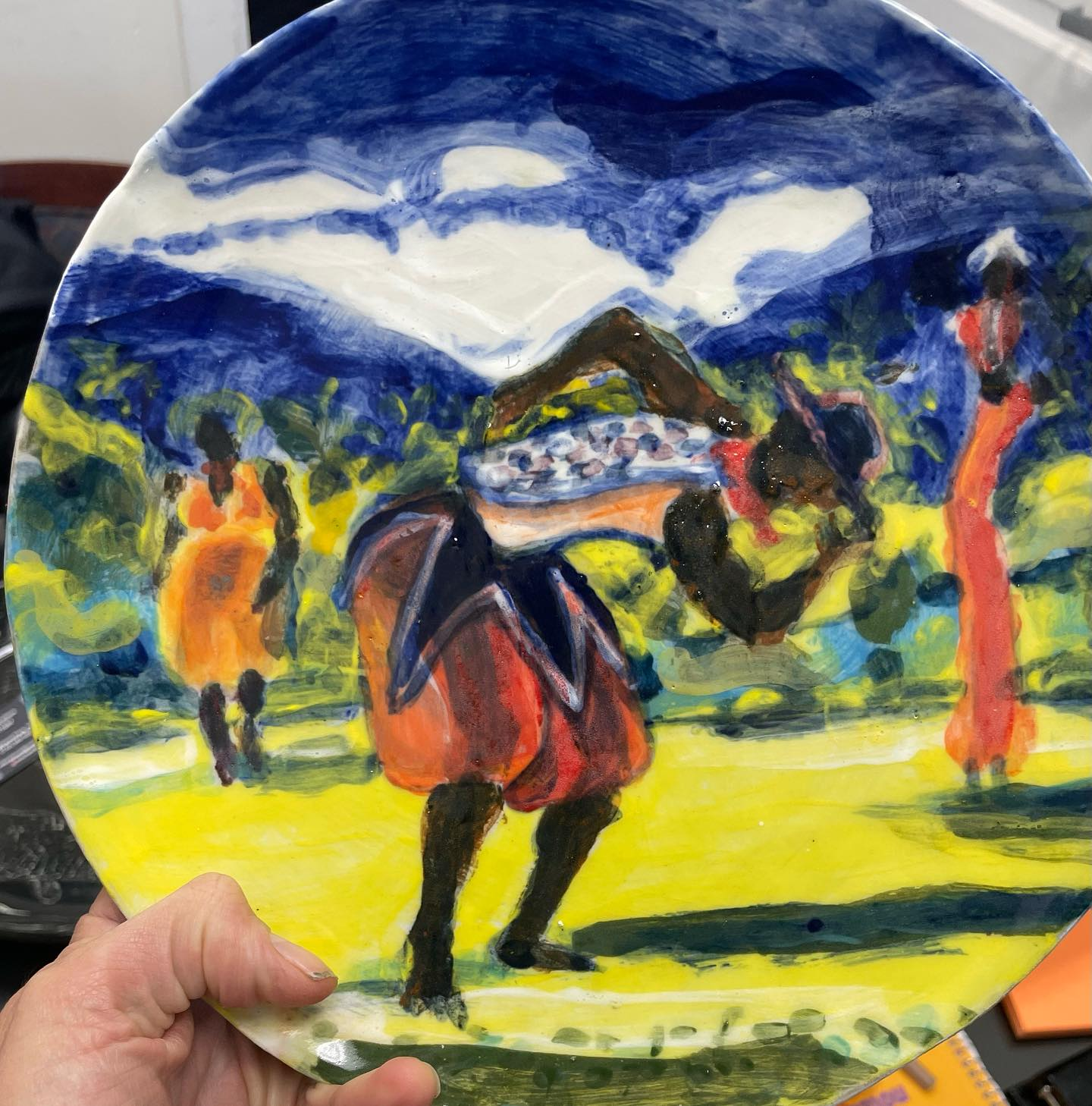
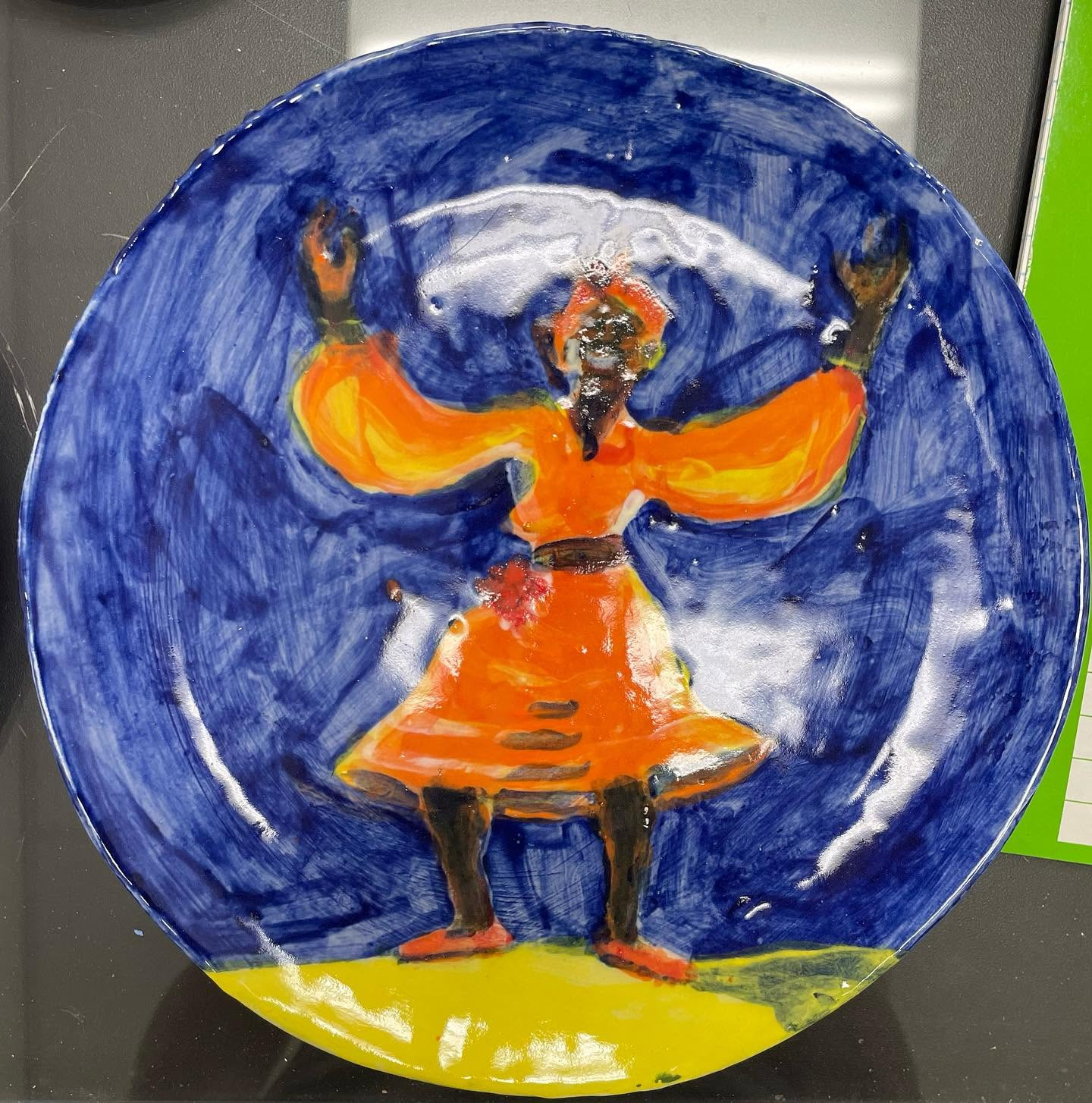
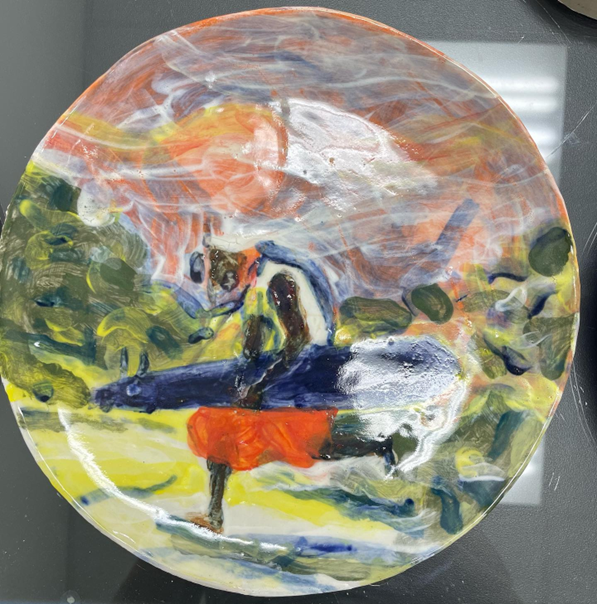
CERAMICS: “My new decorative ceramic masquerade plates were part of a fundraiser for The Center for Contemporary Art and by all accounts did very well. My BAD COWS were the hottest items.” (Victor Davson, December 19, 2023)
GRACE HALE (-2020)
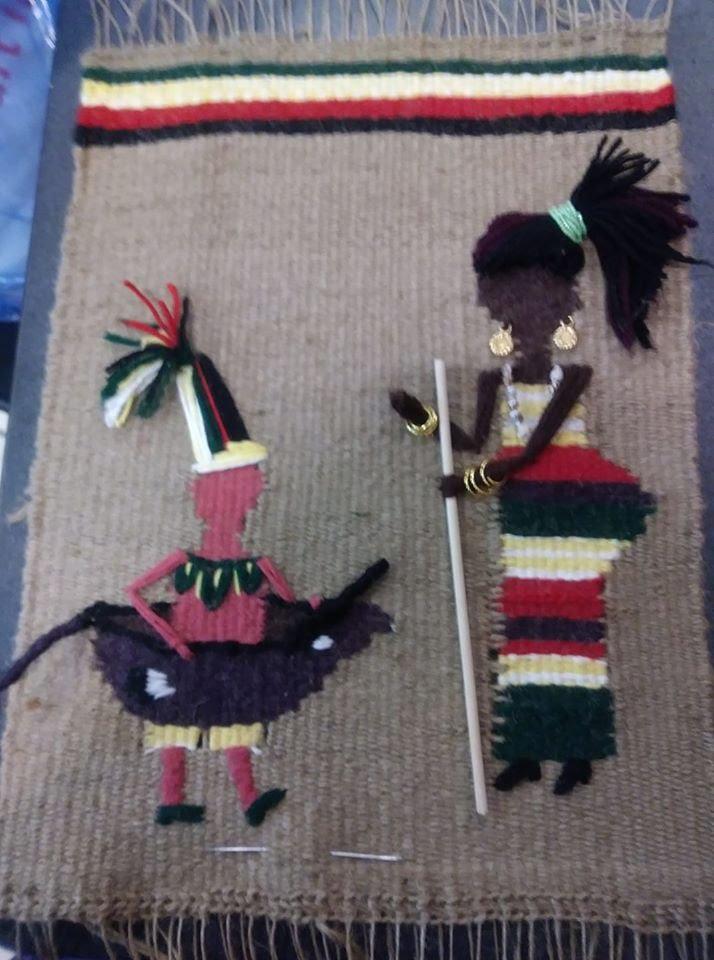
Grace Hale was educated at the E.R. Burrowes School of Art, Georgetown, Guyana, specializing in Textile Construction and Design. She taught art in Botswana and died in New York. She was active in the Community Arts program of the Guyana Cultural Association of New York during the early 2000s.
Grace Hale. “Mad Cow and Mother Sally.” Fibre Art. Before 2020.
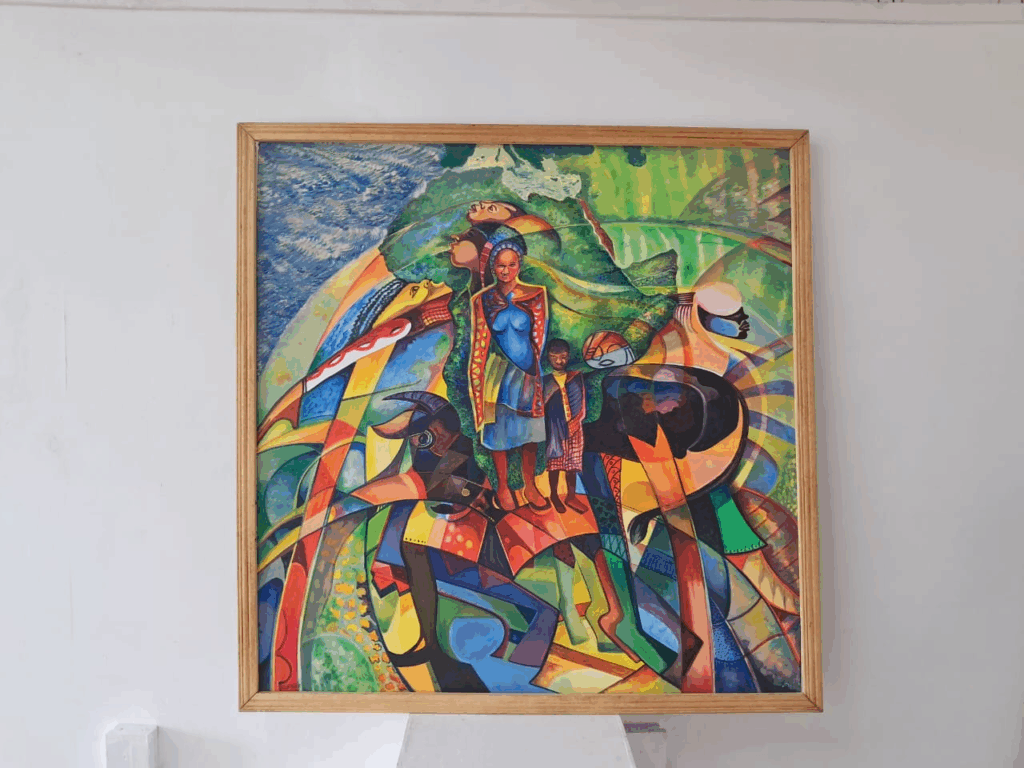
HEW LOCKE, OBE, RA
Hew Donald Joseph Locke OBE RA (born 13 October 1959) is a British sculptor and contemporary visual artist based in Brixton, London. Born in Edinburgh, Scotland, in 1959, Locke is the eldest son of Guyanese sculptor Donald Locke (1930–2010)[14] and British painter Leila Locke (née Chaplin) (1936–1992).[15] He spent his formative years (1966 to 1980) in Georgetown, Guyana, before returning to the UK to study.[16] He received a B.A. Fine Art degree in 1988 from Falmouth University, and an M.A. in Sculpture from the Royal College of Art, London, in 1994. In 1995 he married curator Indra Khanna. Source: https://en.wikipedia.org/wiki/Hew_Locke
Hew Locke, Masquerade in Kitty during the 1960s and 1970s. Ca. 1990s. Photograph courtesy of Dr. Richard Drayton.
IAN IVOR THOM
Studied Sculpture/Monumental Sculpture at Escuela Nacional de artes plasticas (Cuba). He graduated in 1979 and has been the dominant monumental sculptor in Guyana.
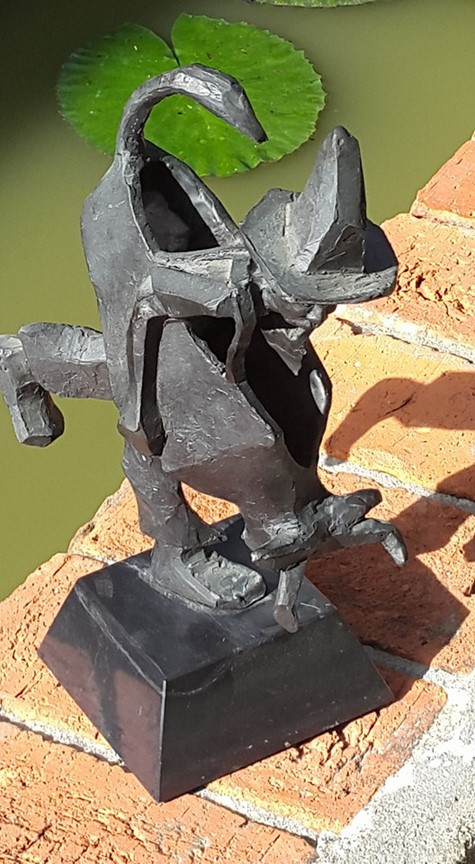
His public monumental works include bronze panels on President L.F.S. Burnham’s Mausoleum, Botanic Gardens (1986), the Damon Monument, Essequibo (1988), and 1823 Monument (2013). Ian Ivor Thoms has also done small bronzes. An example is “Mad Cow” now in a private collection.
Ian Ivor Thom, “Mad Cow.” ca. 2008.
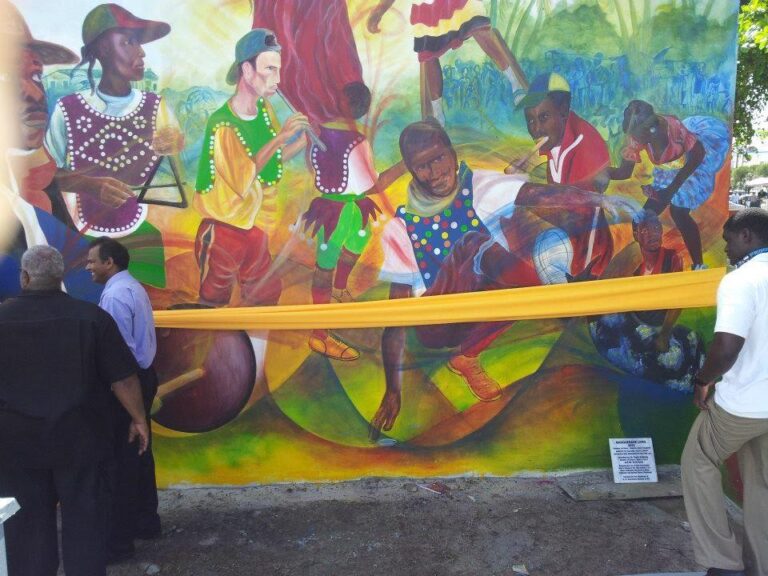
Masquerade Mural (2012)
Masquerade Mural (2012). This mural was designed and executed by students of the E. R. Burrowes School of Art in partnership with the Guyana Cultural Association of New York, Inc, led by Errol Doris.
Joshua Tujay Macey … Digital Nomad
I first encountered Joshua Tujay Macay in Isabelle De Caries’ 2024 film Masquerade Unmasked.
In that appearance he described himself as a “digital nomad” — a creative practicing Masquerade at its roots. As a Kumfah man at its African spiritual and cosmological, Egungun roots.
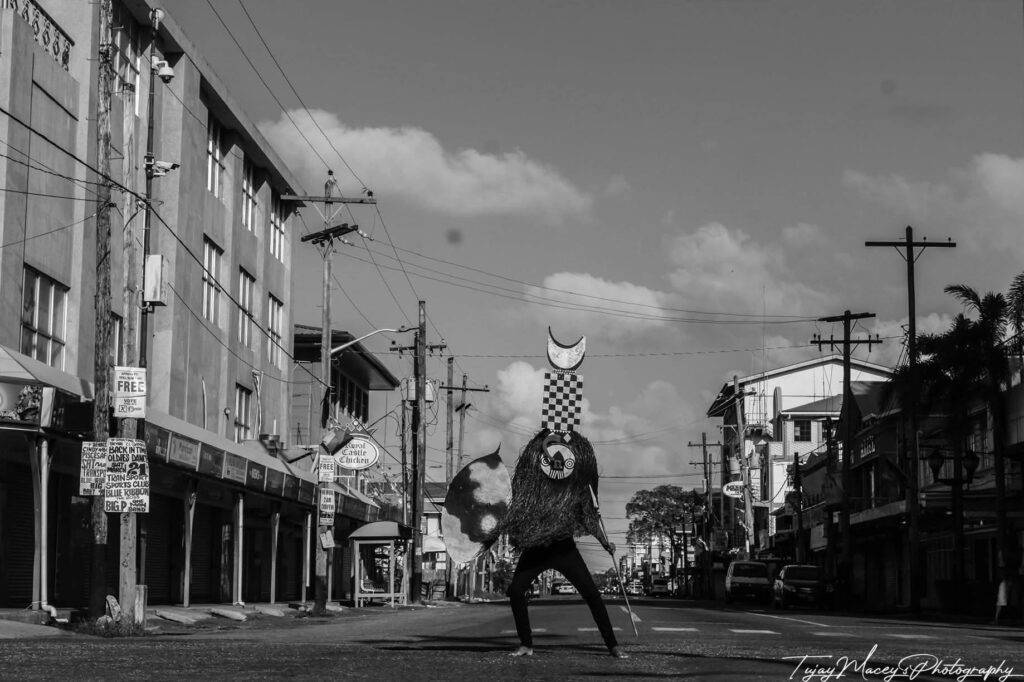
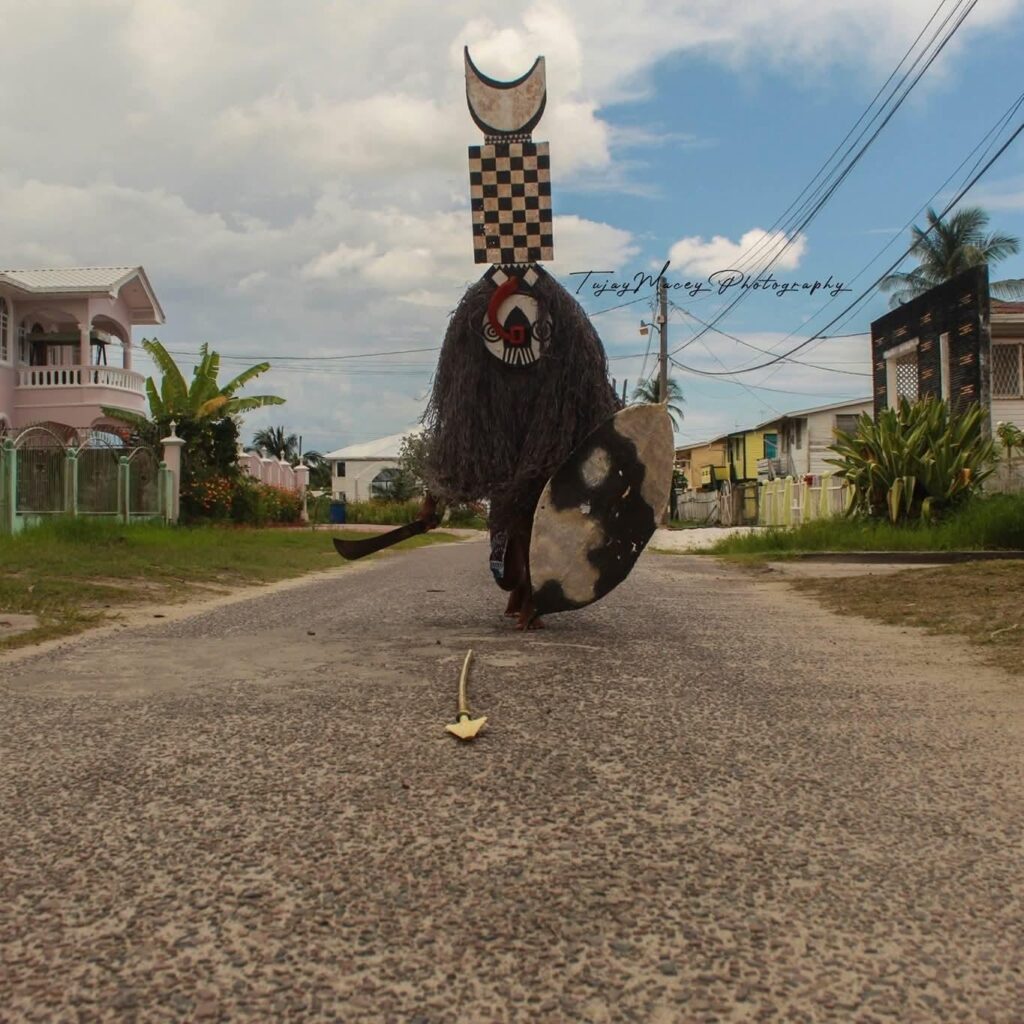
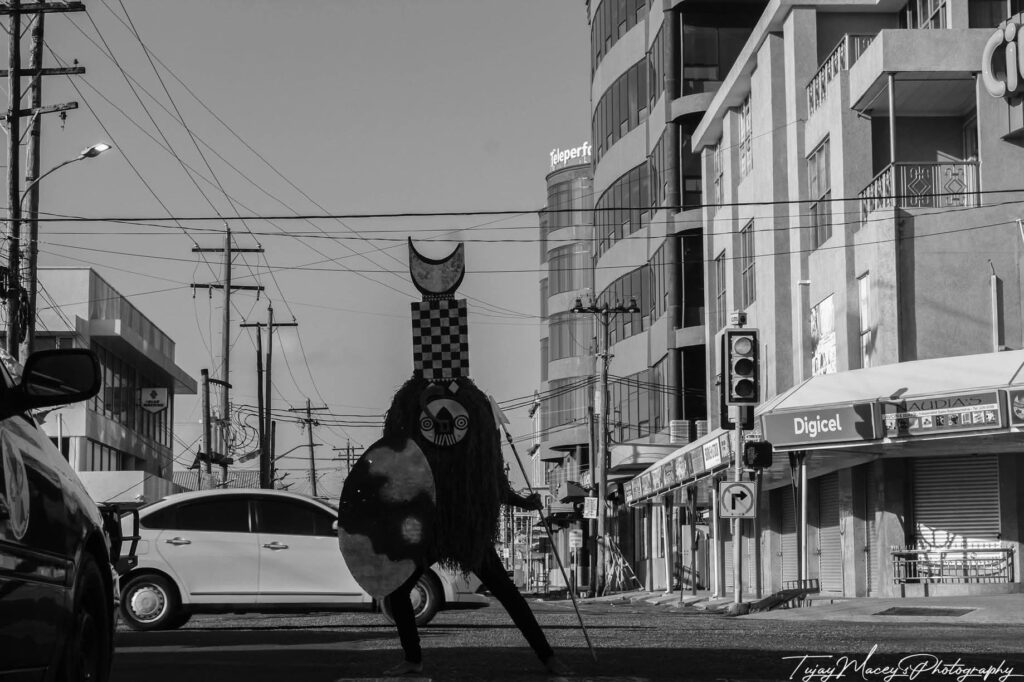
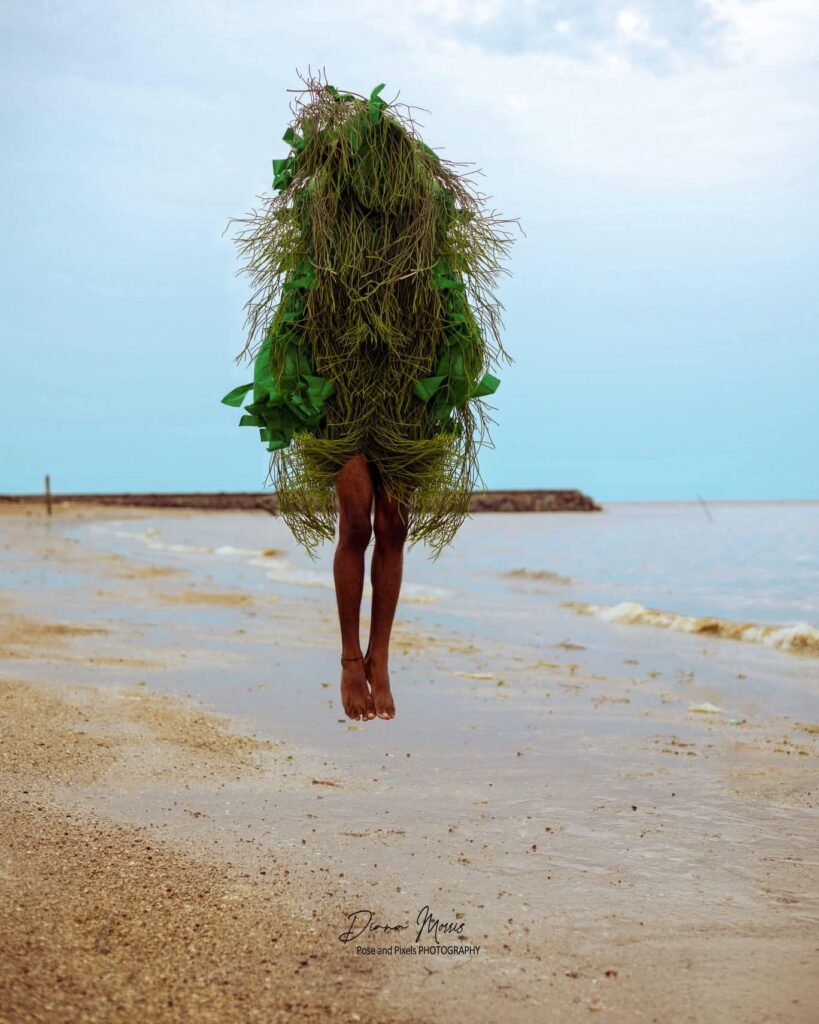
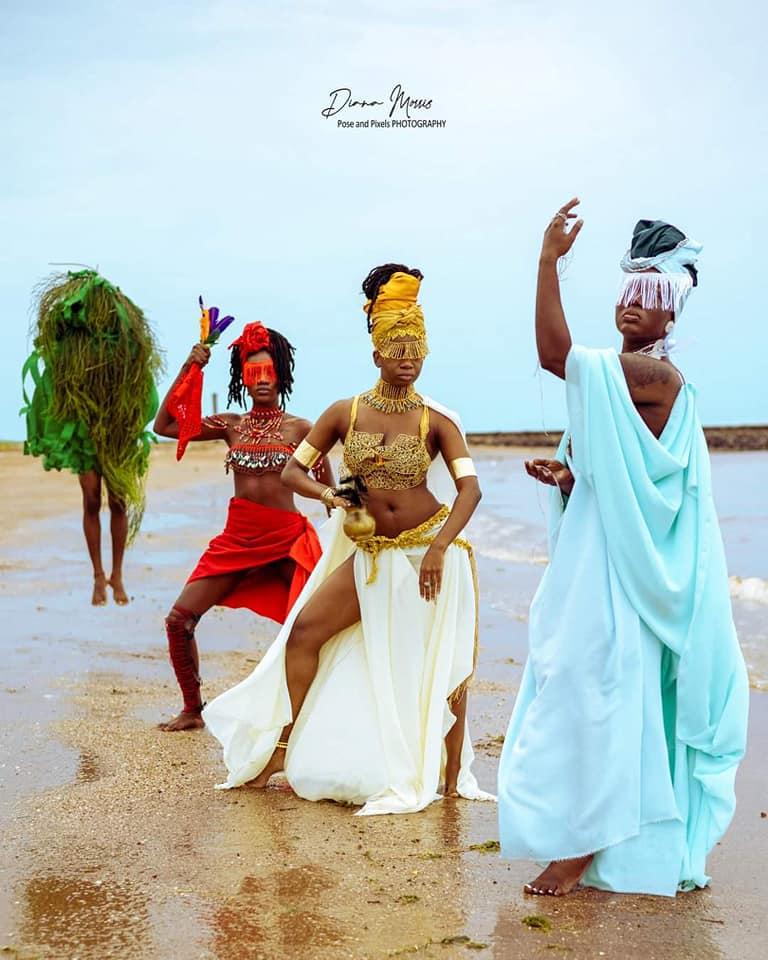
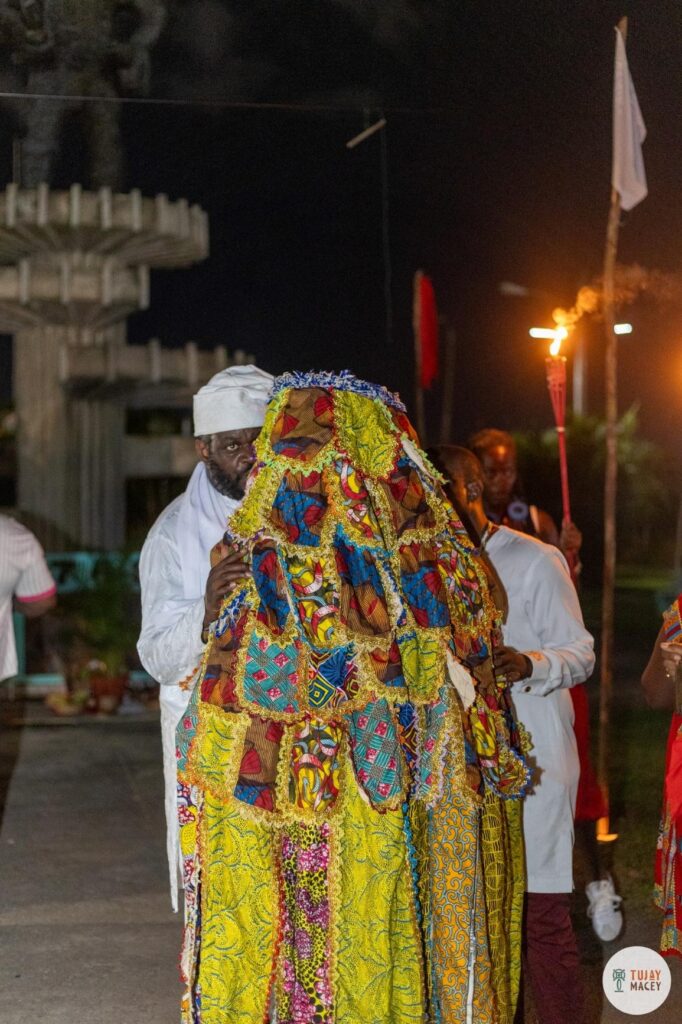
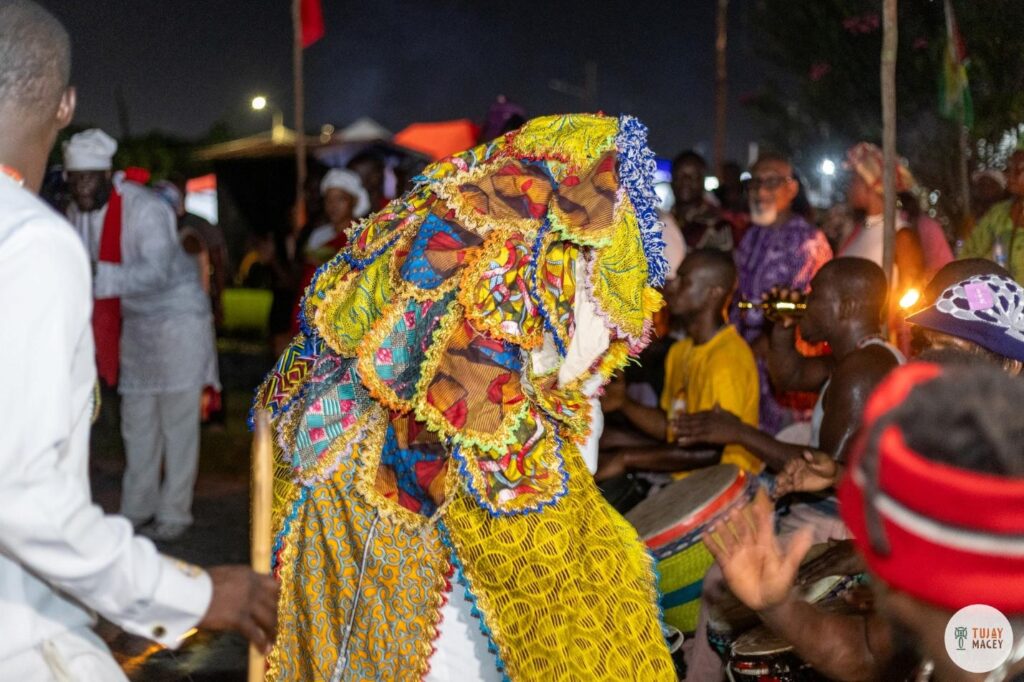
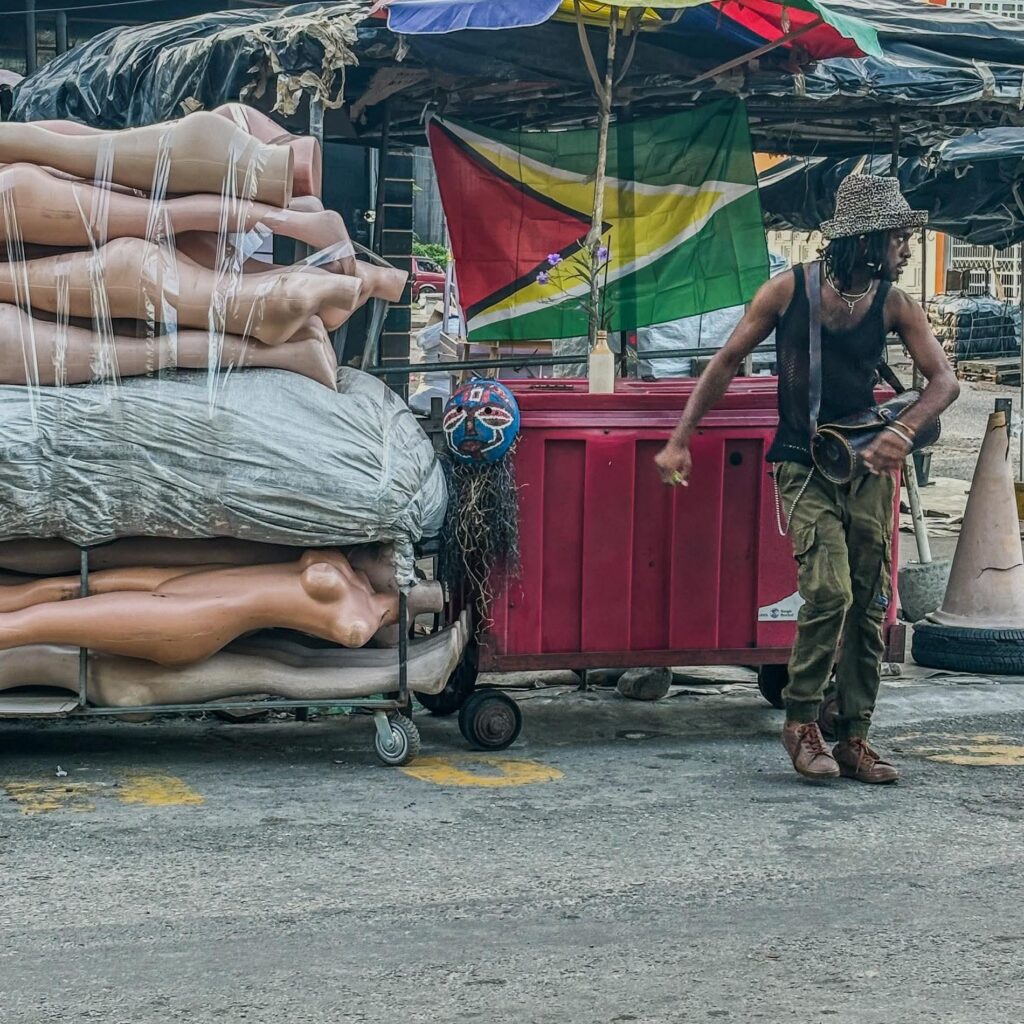
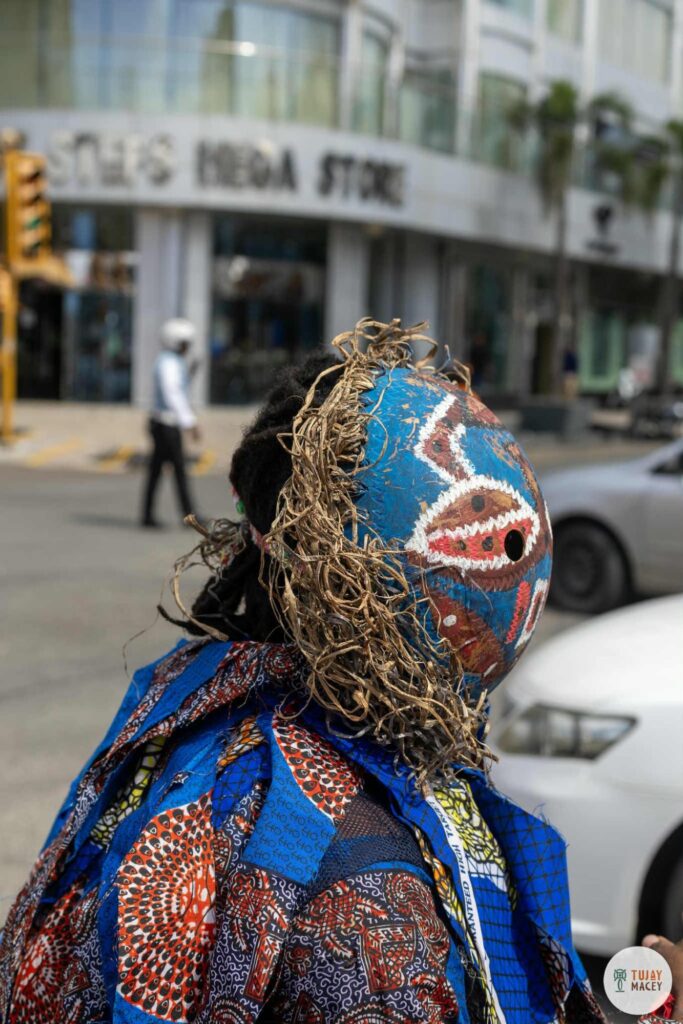
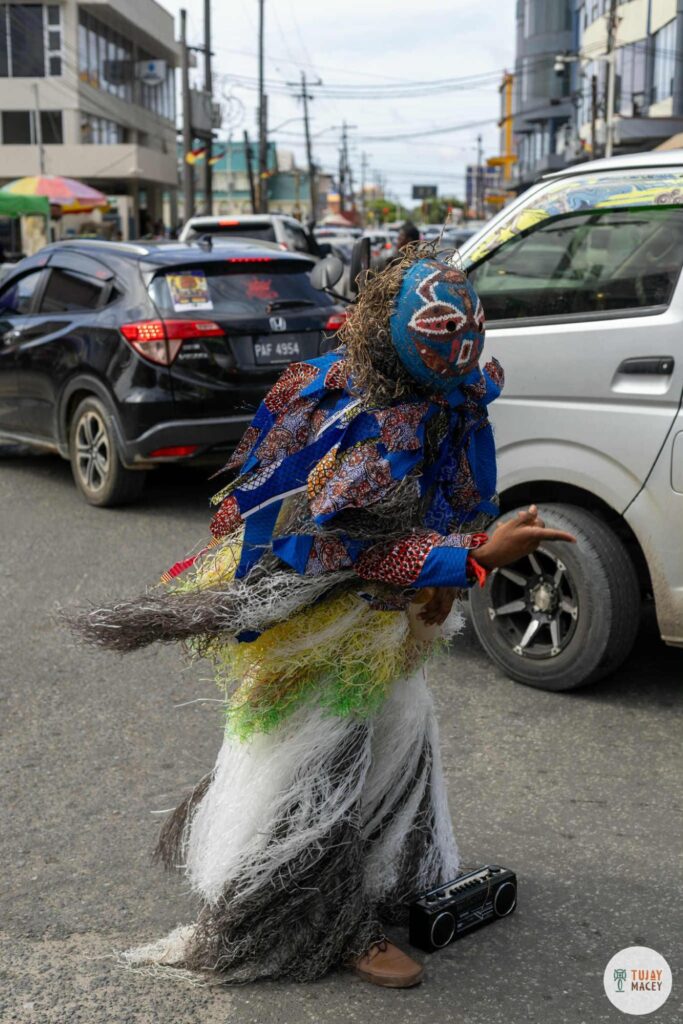
This exhibition explores his works since 2021 and includes photographs him presenting Masquerades created by Gerry Gittens, photographs of his creations, his Masquerade-themed photographs, and a video of his Emancipation Day 2025 creation.
I draw from his Facebook posts to caption the images used in this exhibition.


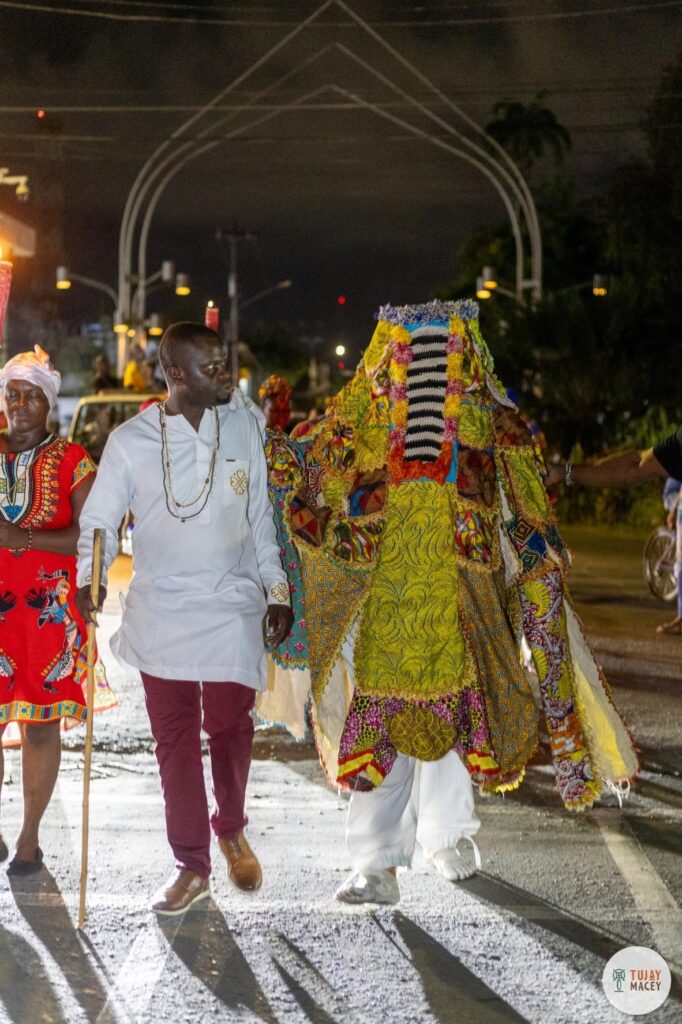
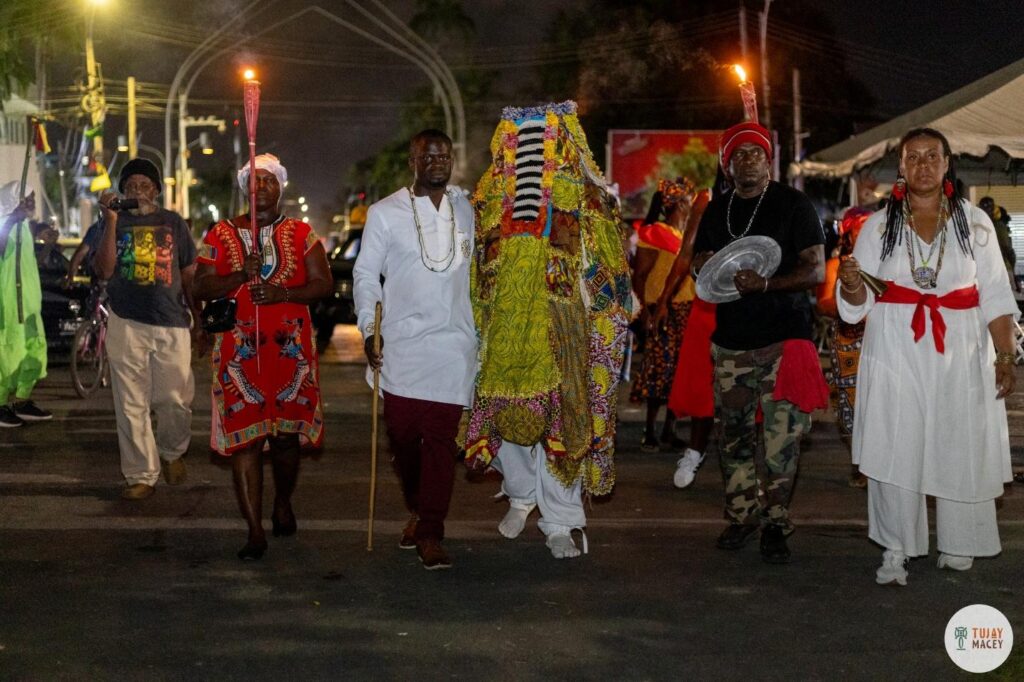
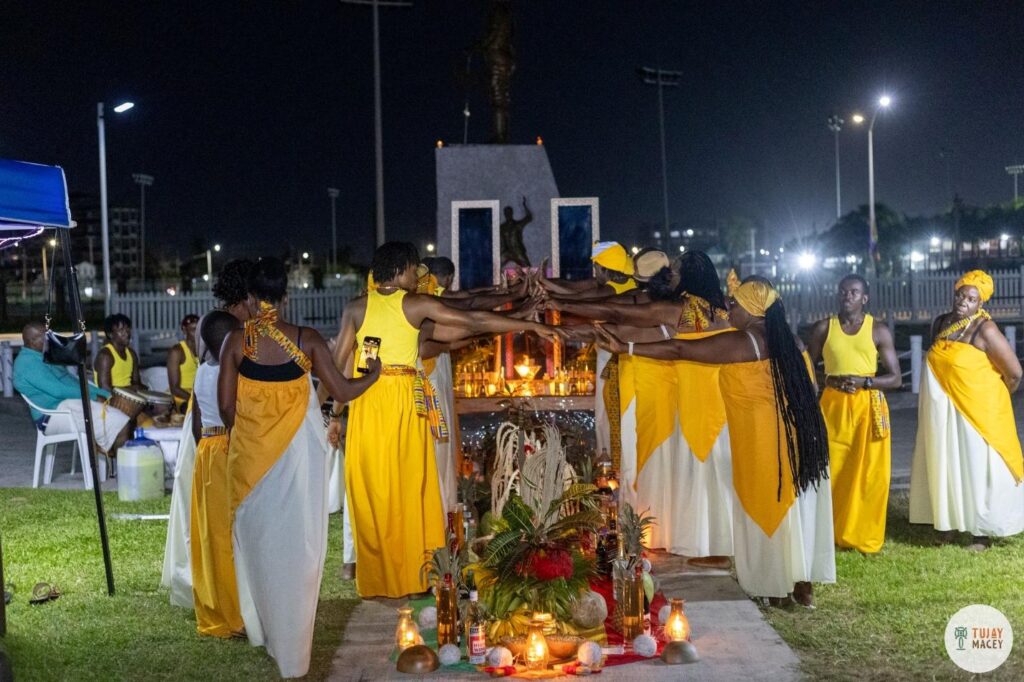
Libation 2025 “Libation happens every year, the night before into the morning of Emancipation. This year I had opportunity to document the libation march in Georgetown, ritual and offering worship, it was quite the experience and as a Kumfah dancer I felt every drum beat and chant in my bones, I am the living manifestation of my ancestors, I am here because they lived.”(Joshua Tujay Macey, Facebook post, August 6, 2025) Egungun …


“𝐄𝐠𝐮𝐧𝐠𝐮𝐧 is a Yoruba traditional masquerade danced once a year to call forth and pay respect to the ancestors and to bring forth blessings and strength.” From Libation Walk, Georgetown, Guyana, July 31, 2025. Photograph by Joshua Tujay Macey.
Happy Emancipation 2025: “As a Kumfah dancer …”


Happy Emancipation 2025: VIDEO: Masquerade Dance.
“The latin America/Caribbean Masquerade is a symbol of resilience, rebellion, freedom and perseverance of a people, who fight from day one to now.
For the return of masquerade we must analyze the spiritual origins.Egungun is a Yoruba traditional masquerade danced once a year to call forth and pay respect to the ancestors and to bring forth blessings and strength.
In Guyana we call that Dance Kumfah which is still a spiritual practice in faith baptist, ifa and even the idea of speaking in tongues and worship dance in Church. This my heritage, my culture, my belief as a kumfah man. You’re great people, we are great people.
Parades grounds are sacred land.
Video and edited: Akeem King
Masquerade designed by: Joshua Macey Tujay Macey’s Photography
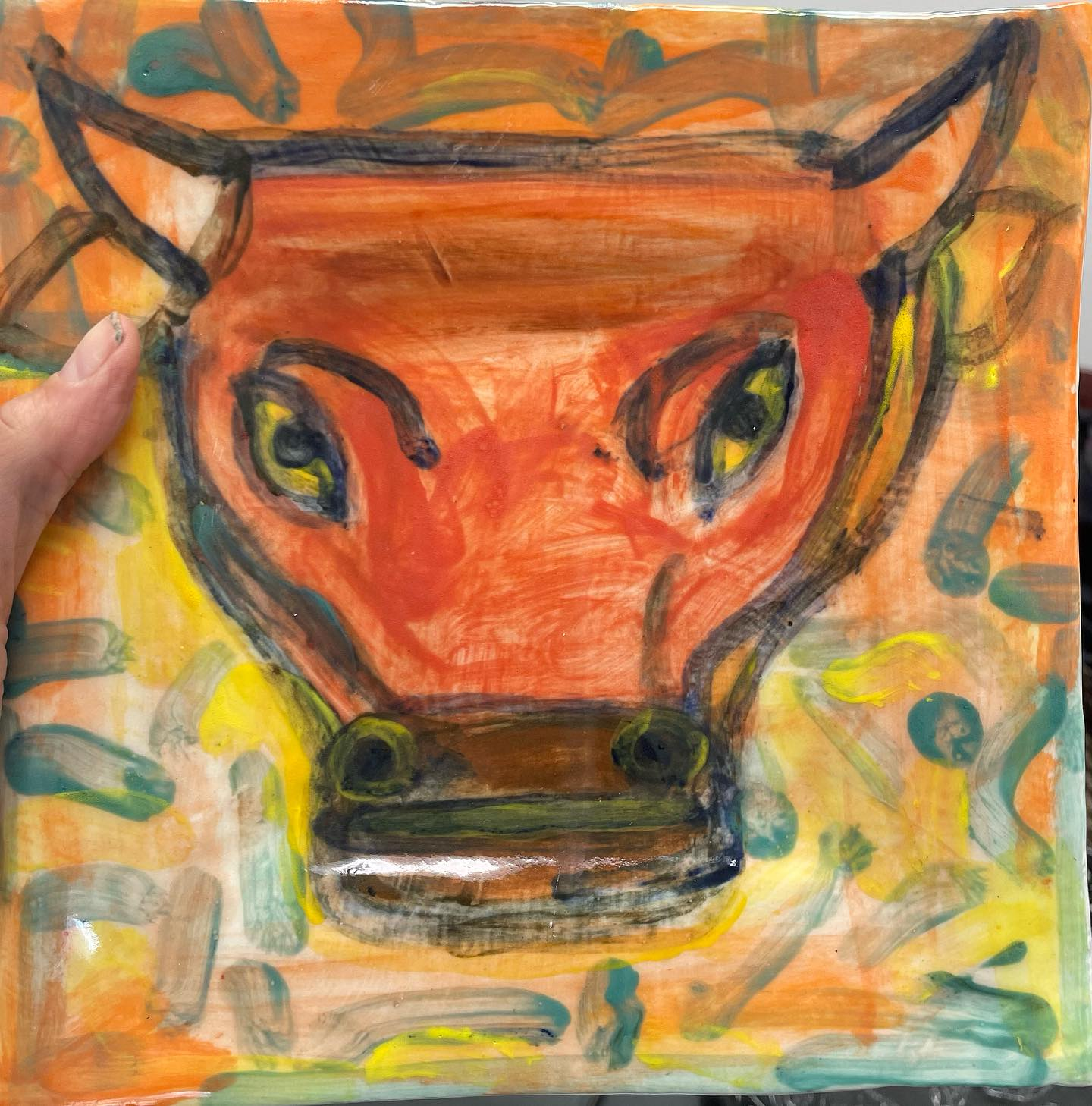
Made by: Melissa Wilson
The Masquerade was made in 2023
https://www.facebook.com/joshua.macey.7/videos/1423947278909928
Vibert C. Cambridge, A.A., Ph.D.
Chair, 2025 Symposium and Literary Hang.
August 17, 2025.